How AI Picks Winning UGC to Run as Paid Ads
AI replaces manual UGC review by scoring 7 organic signals to find creator content ready for paid spend. Here's how it works in August 2026.


Getting creator content is the easy part. Knowing which video to actually put spend behind, and doing it fast enough to matter, is where most programs stall. AI scores the batch on the signals that predict paid performance, so you're not guessing when creative fatigue is already accelerating.
TLDR:
- The bottleneck in UGC ads is selection, not production. AI scores organic signals to send budget to proven winners.
- AI reads 7 organic signals before flagging a paid asset: hook retention, view-through rate, saves, replays, comment sentiment, early velocity, and cross-platform repost behavior.
- TikTok Spark Ads run from the creator's handle carry accumulated engagement, driving 25% higher CTR than standard in-feed ads, a figure tied to the Spark Ad mechanic itself.
- Lock whitelisting rights in the brief before the creator shoots. Waiting until after the AI flags a winner gives pricing power to the creator.
- Launchpoint tracks organic posts across 5 platforms, surfaces winning assets, and activates them through Spark Ads, Partnership Ads, or bulk Meta launches.
Why Most Creator Content Never Becomes a Paid Ad
Run a creator program at any real scale and you sit on a library of dozens or hundreds of usable videos. Most never run as ads. The bottleneck is selection, not production. Manual review moves too slowly, drifts on gut feel, and rarely stays consistent across a big batch.
Timing pressure makes it worse. People who saw an ad 6 to 10 times were 4.1% less likely to buy than those who saw it 2 to 5 times, and creative fatigue keeps accelerating as ad load climbs in 2026. Winners stall in the library while the window to run them closes.
The Organic-to-Paid Selection Gap
Picture the decision. Fifty creator videos land in your library, all shot to brief, all technically fine. Before a dollar commits, none carry a performance hierarchy. You cannot tell which hook earned attention and which quietly died.
Ranking them by hand means watching each one, cross-checking organic views, likes, and completion against every other asset in the batch. Team bandwidth runs out long before the list does.
That is the gap: not producing enough UGC (see a full UGC content strategy guide for how to structure the upstream side), but knowing which video has earned paid spend. An AI triage layer scores the batch, so budget follows proof instead of guesswork.
What Signals AI Reads Before Recommending a Paid Asset
Scoring paid content is a leading-indicator problem. AI reads organic behavior that predicts how a video performs once budget pushes it to cold audiences.
- Hook retention past three seconds: a weak hook fails faster under paid than any other signal.
- View-through rate: completion tells you the middle holds, beyond the open.
- Engagement against the account baseline, so a burner with 400 followers is judged on its own curve.
- Replays and saves: intent signals that outrank a passive like.
- Comment sentiment: whether attention is positive or confused.
- Early-view velocity: the closest organic proxy for paid pull.
- Cross-platform repost behavior: a hook that travels tends to survive new audiences.
Read together, these separate a video that got lucky from one that keeps converting when spend scales it.
How Hook Analysis Works at Scale
The first two seconds carry the ad. AI reads the opening frame, spoken line, and text overlay, then maps each against the retention curve it produced organically. A hook that holds viewers past the scroll threshold gets flagged; one that leaks attention gets dropped.
This is not A/B testing one polished ad with two thumbnails. Every creator's video, including lo-fi videos shot without production polish, becomes its own hook experiment, run at organic cost across dozens of faces and openings at once. The AI reads which openings already beat their account baseline, so you commit budget to hooks that proved pull before a single dollar moved.
Why Organic Volume Feeds Better Paid Decisions
Signal quality scales with sample size. Ten creator videos give you a thin distribution and no credible way to separate a real winner from noise. Run 100, and the AI has a wide comparison set, enough to flag statistical outliers that hold up when spend hits them.
Volume also feeds the delivery engine. Meta's Andromeda, which finished its global rollout in October 2025, reads the creative itself and rewards variety. Meta reports advertisers who turned on Advantage+ AI-driven creative features saw a 22% increase in ROAS. More organic tests means a deeper bench of proven variants to feed it.
Moving a Winning Asset Into a Paid Ad: The Two Activation Paths
Once the AI flags a winner, it graduates into paid one of two ways.
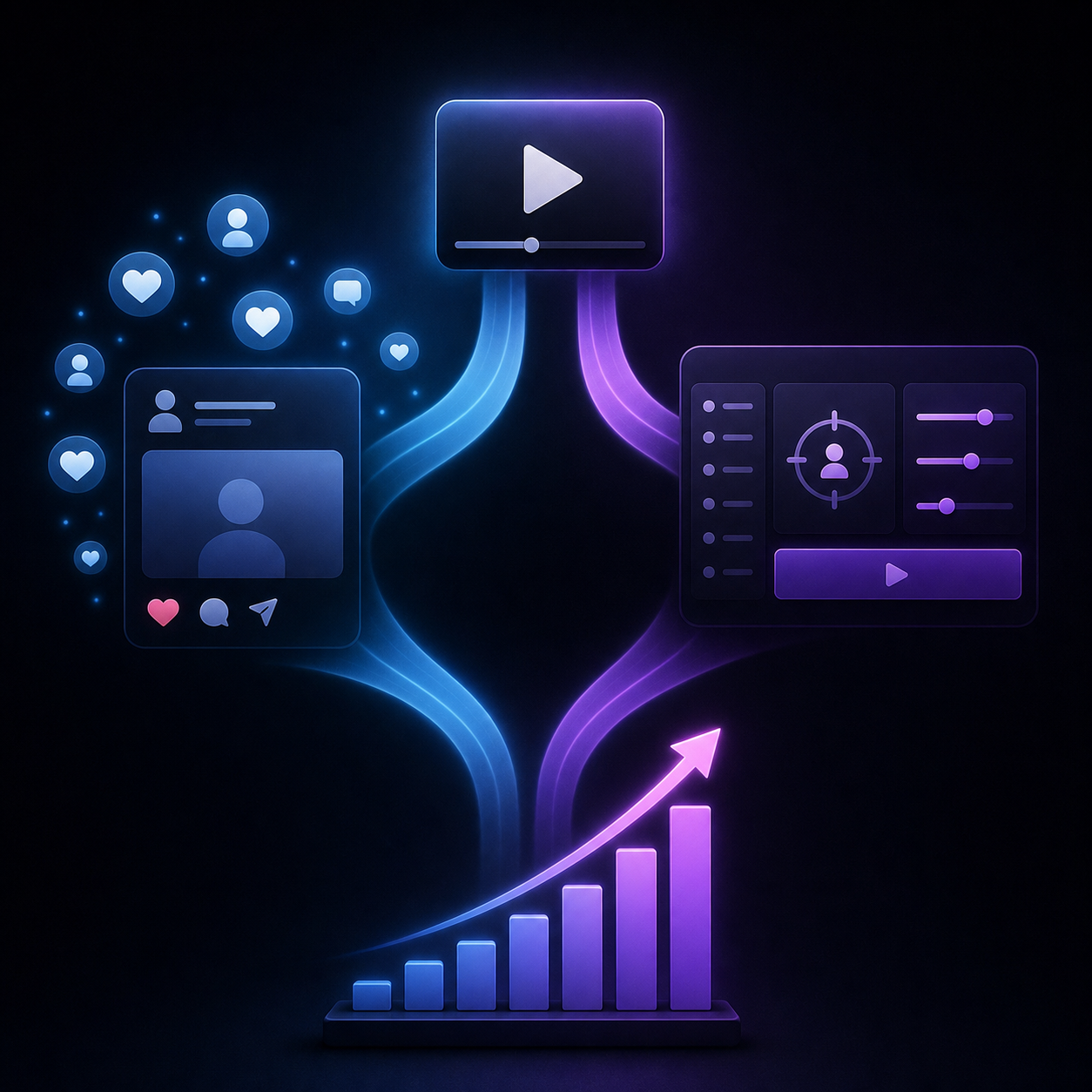
Run the creator's original post as an ad. TikTok Spark Ads and Instagram Partnership Ads serve the live post from the creator's handle, so the likes, comments, and views already stacked on it carry into the paid unit. Pick this when social proof and native feel drive the campaign.
Pull the raw file into your ad account as a direct upload. You lose the attached engagement but gain full targeting control and no dependency on the organic post staying live. Pick this when you want to test audiences and offers at scale.
Factor | Spark Ad / Partnership Ad | Direct Upload |
|---|---|---|
Ad source | Live post from creator's handle | Raw file in your ad account |
Engagement carryover | Existing likes, comments, and views stack on the paid unit | Starts at zero engagement |
CTR impact | 25% higher CTR than standard in-feed ads | Baseline in-feed performance |
Targeting control | Limited: tied to the live organic post | Full control: audience, offer, and copy variants |
Dependency risk | Paid unit breaks if creator deletes the post | No dependency on organic post staying live |
Permission required | TikTok Boost Code or Meta partnership tag from creator | None beyond owning the file |
Best for | Campaigns where social proof and native feel matter | Audience and offer testing at scale |
Spark Ads and Partnership Ads: Keeping Creator Identity in the Paid Unit
Running a paid ad from a creator's account keeps the organic proof intact. A brand-account upload starts engagement at zero; a Spark Ad keeps whatever the post already earned and stacks new engagement on top, which is why TikTok Spark Ads drive 25% higher CTR than standard in-feed ads, a lift tied to the Spark Ad mechanic itself.
The mechanics run on permission. TikTok needs a Spark authorization code from the creator; Meta needs a partnership tag. Both grant your ad account access to serve the live post from the creator's handle.
That access has to exist before launch, not after. When the AI flags a winner, the usage rights are already structured in the brief, and the asset moves into paid without a mid-campaign scramble for codes.
Bulk Creative Activation and Why Manual Launch Fails at Scale
Selection is one bottleneck. Activation is the next, and solving the first without the second leaves the pipeline just as slow.
Say the AI flags 30 winners. Now someone downloads each file, uploads it into Meta, builds an ad set, sets targeting, and repeats. Serial work like this burns hours, and by the time the last variant goes live the first is already fatiguing.
Bulk workflows collapse that. You upload the batch, tie each file to the right campaign parameters, and launch many UGC ad variants at once instead of one at a time.
Cross-Platform Behavior as a Predictive Signal
A hook that wins on one platform might be riding a platform-specific trend. When the same video beats its baseline on both TikTok and Instagram, that agreement is stronger evidence of content quality than any single-channel spike.
Multi-platform creator analytics also groups the same asset across channels, so a video cross-posted to three feeds counts as one performer, not three. That stops inflated view totals from pushing a mediocre asset into paid.
Feed the AI both channels and it separates durable creative from a local moment. Single-channel selection cannot tell the two apart.
The Whitelisting Layer: Dark Posts and Targeting Without the Organic Feed
Spark Ads and Partnership Ads tie the paid unit to a live organic post. Influencer whitelisting removes that requirement: the creative runs as a standalone ad from the creator's handle, with no matching post on their feed. Pick this when you want tighter targeting control or need to test several copy variants over one winning video.
Set the terms upfront. Usage duration, ad spend limits, geographic restrictions, and campaign end terms belong in the brief before the creator shoots, not in a negotiation after the AI flags a winner. Lock rights early and pricing power stays with you; wait until mid-campaign and it moves to the creator.
How Launchpoint Connects AI Selection to Paid Activation
We built Launchpoint to run this whole loop as a managed UGC service. We track organic creator posts across TikTok, Instagram, YouTube, Facebook, and Snapchat, surface the performance signals that flag which assets have earned paid spend, and activate winners through Spark Ads, Partnership Ads, or direct bulk Meta launches. Whitelisting rights and Boost Code access sit in the brief upfront, so permissions are ready the moment a winner surfaces. Across the network, we have tracked 150,000+ campaign posts, 2 billion+ post views, and 10 million+ paid-ad impressions. You approve or reject; we handle the logistics.
Final Thoughts on Scaling UGC Ads With AI Selection
The gap between a creator library and a paid ad account isn't production, it's the scoring layer in between. When AI reads organic signals before any spend commits, your budget stops chasing gut feel and starts following proof. Add bulk activation and whitelisting rights locked upfront, and the whole loop runs without a mid-campaign scramble. Book a call if you want to see how we run this as a managed service against your existing creator content.
FAQ
My team spends hours uploading creator videos into Meta one by one. Is there a faster way?
Bulk creative workflows let you upload a batch of creator files, tie each to the correct campaign parameters, and launch many Meta ad variants at once instead of repeating the process serially. Launchpoint's bulk Meta ad launch does exactly this: you upload the batch, and ad status and performance come back to the same content view so you can track every variant without switching tools.
I'm tired of chasing creators for TikTok Spark codes over DMs. Is there a better way to manage this?
The fix is structural: Spark code authorization belongs in the brief before the creator shoots, not in a mid-campaign message thread. When usage rights and Boost Code access are locked into the upfront agreement, permissions are ready the moment a winning asset surfaces and there is no scramble to collect codes after the AI flags a video for paid spend.
How do I turn best-performing organic TikTok and Instagram content into paid ads using ugc ads ai signals?
Score the organic batch first using hook retention, view-through rate, early-view velocity, and cross-platform repost behavior: these are the leading indicators that predict paid performance before a dollar moves. Once a winner clears the threshold, activate it either as a TikTok Spark Ad running from the creator's handle (which carries existing likes and comments into the paid unit) or as a direct video upload into your ad account for full targeting control.
What's the best platform for running organic UGC campaigns and paid ad launches in one system?
Launchpoint connects organic creator tracking across TikTok, Instagram, YouTube, Facebook, and Snapchat with bulk Meta ad launch, Spark Ad activation, and creator pay in one managed workflow, so the loop from content production through paid scale runs without rebuilding the process each time. The alternative is separate tools for sourcing, tracking, and ad launch, which reintroduces the manual handoffs that slow launches and obscure which creative drove the result.
How do I fight creative fatigue in paid social by testing more creator content variants?
Run more organic creator posts before you commit budget: signal quality scales with sample size, and a wide comparison set is what separates a real performer from noise. Meta's Andromeda engine reads creative variety directly and rewards it: Meta reports advertisers who turned on Advantage+ AI-driven creative features saw a 22% increase in ROAS. A deeper bench of proven organic variants means more durable paid performance, and a wider pool of options to draw from.