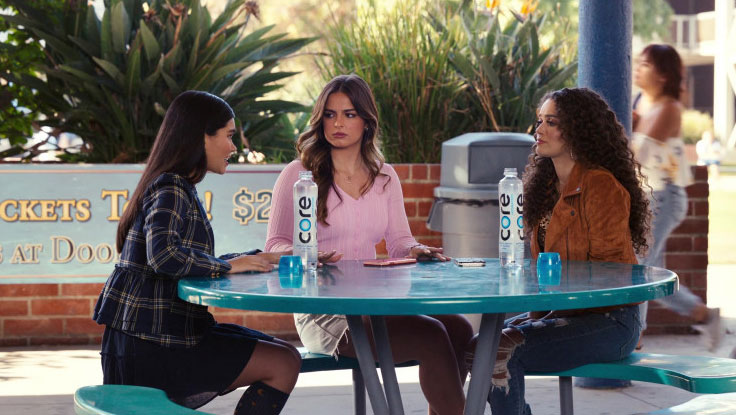
Your sponsored posts are getting ignored because they look like ads. Native product placement UGC solves this by putting your product inside content people actually want to watch. A college athlete films their pregame ritual with your energy drink in frame for six seconds. Your clothing shows up in a trending dance video. Your brand appears naturally in a campus vlog. The creator isn't selling anything because the video isn't about your product, it's about their routine, and you're just part of the scene. That's why native ads get viewed 53% more than display banners while costing under $1 CPM.
TLDR:
- Native product placement UGC blends your brand into creator content audiences choose to watch, driving 53% more views than display ads
- Micro-creators with under 5,000 followers deliver 20% higher conversion rates than celebrity accounts with millions
- Social platforms now function as search engines - 40% of Gen Z uses TikTok to find products, making keyword optimization critical
- C4 Energy generated 80M views at $1.62 CPM across 11K posts by integrating products into athlete content naturally
- Launchpoint automates native UGC campaigns with 20,000+ verified college athletes, handling creator vetting, fulfillment, and payouts at scale
What Native Product Placement UGC Really Means in 2026
Native product placement UGC sits at the intersection of three strategies. Native advertising blends into content feeds. Product placement puts brands inside content. User-generated content comes from real people.
In 2026, these three approaches have merged. Creators post content they'd make anyway, with your product visible for seconds. A college athlete films their morning routine with your energy drink on the counter. Your brand gets exposure without triggering the mental ad blockers that kill engagement.
The key difference from traditional sponsored posts? These videos aren't about your product. They're about the creator's life, and your brand just happens to be there.
Why Native Product Placement UGC Outperforms Traditional Advertising
Traditional ads trigger skip behavior. Native product placement UGC doesn't. Consumers view native ads 53% more than display banners.
The spending tells you where results live. US native display ad budgets grow 13.1% in 2026 to reach $147.98 billion. Global product placement hits $33 billion in 2024.
Authenticity drives the gap. UGC scores 2.4 times higher on perceived authenticity versus brand content. Creator endorsements generate 94% stronger trust than paid ads. You're creating content audiences choose to watch instead of forcing interruptions they avoid.
The Four Types of Native Product Placement UGC That Drive Results
Each format serves different campaign goals. Pick based on your brand awareness stage and budget constraints. Before you choose a format, map what to budget for UGC content across subtle placements, verbal mentions, and full product integrations so the brief matches the level of creator effort you're buying.
Visible Product Placement
Your product appears on screen for at least five seconds. A creator films their gym routine with your water bottle in frame. Your clothing item shows up in a dance video. The creator never mentions you. Viewers see the brand naturally integrated into content they're already watching. This format costs under $1 CPM. Creators post content they'd make regardless, so compensation stays minimal.
Verbal Mentions
Creators call out your brand by name. "Gotta start the day right with C4" before launching into a story. The video isn't about your product, but you get a direct mention that registers with the audience. Pricing increases because you're asking creators to name you directly.
Product Integration
Your brand becomes part of the narrative. A snowboarder uses your gear during a trick tutorial. An athlete explains how your supplement helps them train harder. The content focuses on the creator's expertise while naturally showcasing your product's benefits. This requires the highest creator compensation because they're building content around your product.
Watermarked Content
Your logo overlays creator content. A golfer films practice putting tips with your brand watermark in the corner. You get brand visibility on content designed to go viral without forcing the creator to change their natural style.
| Format Type | How It Works | Brand Visibility Level | Creator Compensation | Best Use Case |
|---|---|---|---|---|
| Visible Product Placement | Product appears on screen for 5+ seconds within creator's natural content without any mention or discussion | Subtle background presence in frame during creator's routine or activity | Under $1 CPM - lowest cost since creators post content they would make regardless | Awareness campaigns targeting maximum reach and view counts at minimal cost |
| Verbal Mentions | Creator calls out brand by name during video but content remains focused on their story or activity | Direct brand name mention registers with audience while maintaining natural content flow | Mid-range pricing due to explicit brand callout requirement | Building brand recall when audiences have seen product placement and need reinforcement |
| Product Integration | Brand becomes central part of the narrative as creator builds content showing product benefits | Product featured front and center with creator explaining how it supports their performance or lifestyle | Highest compensation since creator structures entire video around your product | Consideration stage content driving product understanding and purchase intent |
| Watermarked Content | Brand logo overlays creator content without requiring changes to their natural posting style | Persistent logo visibility throughout video duration on viral-intended content | Variable based on creator reach and content amplification potential | Maximizing brand exposure on high-performing content without altering creator authenticity |
How Social Media Platforms Became Search Engines
Search behavior shifted. Younger consumers now open TikTok or Instagram before Google when looking for restaurants, products, or local services. 67% use Instagram and 62% use TikTok to search locally.
This changes how native product placement UGC functions. Your content needs to rank when someone searches "best pre-workout for athletes" or "comfortable gym clothes" on TikTok beyond performing in the feed.
The algorithm treats videos like search results. Keywords in captions, on-screen text, and spoken audio determine what surfaces. A creator mentioning your energy drink in a morning routine video can rank for "morning energy boost" searches months after posting.
AI models training right now are indexing social videos. ChatGPT and Claude pull information from TikTok and YouTube content more than blog posts. Getting your product into these videos positions your brand in AI training data before competitors catch on.
Channel-Specific Strategies for Native Product Placement UGC
Each channel rewards different content styles. What works on TikTok fails on YouTube Shorts. Match your product placement to how users consume content on each feed.
TikTok
TikTok search drives 40% of Gen Z discovery behavior. Optimize for keywords in spoken audio and on-screen text. A creator saying "best pre-workout for early morning training" while showing your product positions you for search results. Keep placements under 15 seconds. TikTok's algorithm favors watch-through rates, so shorter integrations prevent drop-off.
Instagram Reels
Instagram users follow creators they already trust. Native placement works through lifestyle integration instead of direct pitches. Stories deliver lower view counts but higher engagement rates with existing followers. Use Stories for quick product flashes paired with swipe-up links. Save Reels for longer narrative content where your product appears naturally within the creator's routine.
YouTube Shorts
YouTube surfaces content based on topic clusters and viewer history. Creators need subject matter expertise before product placement registers as authentic. An athlete discussing training techniques while using your supplement performs better than random product appearances.
The ROI Equation: Measuring Native Product Placement UGC Performance
Most brands measure the wrong metrics. They track likes and comments when they need view counts and geographic lift.
Measurement splits into three funnel stages. Awareness campaigns track CPM and total reach. Your native product placement should cost under $1 CPM with visible products. C4 Energy hit 80M views at $1.62 CPM across 11K posts. Track view counts, not engagement rates, at this stage.
Consideration content requires different math. Calculate cost per video view against your paid media benchmarks. If your TikTok ads run $8 CPM, organic creator content at $3 CPM wins. Track which creators drive the highest watch-through rates, then build lists of top performers for future campaigns.
Conversion attribution needs geographic testing. Run campaigns in specific markets, then compare sales lift against control regions. Track promo code usage by creator and location data from creator audiences. This isolates native product placement impact from other marketing channels.
Stop chasing vanity metrics. Your CEO doesn't care about engagement rates. They want to know if views translate to revenue growth in target markets.
Why College Athletes and Micro-Creators Deliver Superior Results
Follower count works against you. Creators with under 5,000 followers drive 20% higher conversion rates than larger accounts. A creator with 3,097 followers hit a 17% like rate while Zac Efron's 59.5M followers managed 0.49%. That's 35x better performance from the smaller account.
College athletes combine micro-creator benefits with built-in credibility. They have natural social standing on campus and authentic connections with Gen Z audiences. When a lacrosse player recommends your energy drink, their 2,000 followers trust that endorsement more than a celebrity getting paid $50,000 for a single post—avoiding the authenticity trap that plagues traditional celebrity partnerships.
Algorithms favor authentic engagement over raw reach. A student athlete's followers actually watch their content and comment. Celebrity accounts attract passive followers who scroll past sponsored posts. Higher engagement rates signal quality to TikTok and Instagram, pushing your native placements into more feeds.
Turning One-Time Posts Into Scalable Content Systems
Single campaigns don't build momentum. You need recurring creator relationships that generate content weekly, not once.
Trust score systems filter unreliable creators automatically. Creators who receive products and don't post see their scores drop. Scores below 4 lock them out of deals and reduce compensation. No manual tracking required.
Template-based creation removes the ideation bottleneck. Instead of briefing each creator individually, you build formats that work and let creators replicate them. One workout template can generate hundreds of videos across different athletes and sports.
Product fulfillment connects directly to campaign acceptance. A creator agrees to post, your product ships automatically, they create content within the deadline. C4 Energy generated 11K posts across 4K athletes because the system handled fulfillment, payments, and quality checks.
Native Product Placement UGC for Full-Funnel Marketing
Brands stop native campaigns at awareness. Wrong approach. Native product placement UGC runs through all three funnel stages when structured correctly.
Awareness starts with subtle visibility. Your product appears in viral content for five seconds. Creators film pranks, stories, and tutorials with your brand naturally present. Viewers see you without processing it as advertising. You're paying for mental availability, not immediate sales.
Consideration moves to explicit mentions. Same creators, different brief. Now they're explaining why your product works for their training, their style, or their routine. Athletes bring credibility that random UGC creators can't match.
Conversion happens through paid amplification of top-performing organic content. Take your best consideration videos and boost them as ads. Creator partnership ads deliver 15% higher ROAS than standard creative, with whitelisting giving you direct access to creator accounts for better targeting and performance.
Run all three stages with the same creator network and you stop leaving revenue on the table.
Scaling Native Product Placement UGC With Creator Networks
Managing 50 creators manually works. Managing 5,000 requires different infrastructure. UGC on product pages increases conversions by 161% compared to pages without it, but you need production velocity to keep pages fresh.
Creator networks solve the sourcing bottleneck by giving you access to verified pools across every major market and demographic. Instead of negotiating with individual creators, you set your budget and content starts flowing within 24 hours. SideShift reviews show how different platforms handle this process.
The advantage? Networks automate contracting, 1099s, payment processing, tax compliance, and product shipping. You approve videos. Everything else runs automatically.
How Launchpoint Automates Native Product Placement UGC at Scale
We handle creator vetting, contracting, product fulfillment, payouts, and tax compliance while you focus on approving videos. Our network includes 20,000+ verified college athletes across 35+ sports and 1,000+ US colleges.
Set your budget and content requirements. Athletes create videos using in-app templates, then submit for approval. AI filters catch low-quality content before it reaches you. Scripts and on-screen text get optimized for search keywords so your native placements rank on TikTok and Instagram.
Track view counts, engagement rates, and CPM in one dashboard. Export approved videos as paid ads using included boost codes that deliver 25% higher CTR on TikTok.
Final Thoughts on Native Placement Strategy
The shift from search engines to social feeds changed how discovery works. Native product placement UGC positions your brand where Gen Z actually looks for recommendations. College athletes give you credibility with younger audiences at a fraction of celebrity costs. Run a test campaign, measure CPM and view counts, then decide if the numbers beat your current ad spend.
FAQ
How long does it take to see results from native product placement UGC campaigns?
Most brands see content go live within 24 hours of campaign launch, with measurable view counts appearing in your dashboard within 48-72 hours as posts gain traction organically.
What's the difference between native product placement and traditional sponsored posts?
Native product placement integrates your brand into content creators would post anyway - your product appears for 5+ seconds while they film their routine. Sponsored posts make your product the main topic, which triggers ad avoidance behavior and costs far more.
Can I use organic native placement content as paid ads?
Yes, and you should. Boosting top-performing organic creator content delivers 15% higher ROAS than standard ads, with creator partnership ads showing 53% higher click-through rates on platforms like Meta.
When should I move from awareness-stage native placement to consideration content?
After you've generated at least 10-20M views in your target markets through subtle product visibility. At that point, audiences have seen your brand enough times to engage with more explicit product-focused content from the same creators.
How do I track ROI from native product placement if creators don't include links?
Run geographic incrementality tests by launching campaigns in specific markets, then compare sales lift against control regions. Track view counts by location using creator audience data, then match against revenue changes in those same markets.