How to Become a Canvas UGC Creator: Getting Paid to Post on Brand Accounts
Learn how to become a Canvas UGC creator and get paid $50-$2,500 per video posting on brand accounts. No followers needed. Start in August 2026.


If you're trying to break into Canvas UGC creator work, the biggest mistake is waiting until you have a following. Brands hiring UGC creators aren't paying for your audience. They're paying for content they can use in their own ads, social feeds, and campaigns. Your deliverable is the video or photo file itself, not a post to your followers. That changes the entire job. You don't need reach. You need clean footage, the ability to follow a brief, and a portfolio that shows you can deliver. Once you understand what brands are buying, the path to your first paid project gets clearer.
TLDR:
- UGC creators get paid for content itself, not audience size—brands pay $50-$2,500 per video depending on experience and usage rights.
- You need zero followers to start: film 3-5 spec ads with products you own, build a free Canva portfolio, and apply on Fiverr or creator networks.
- According to industry data, UGC ads see up to 4x higher click-through rates than polished brand content because consumers trust authentic creator footage 2.4x more than traditional ads.
- Usage rights are where most creators leave money—30-day paid ad licensing adds 20-30% to your base rate, 90-day buyouts can double it.
- Full-time UGC creators average $48,000-$72,000 annually in 2026, with finance and SaaS niches paying more than lifestyle content.
What Is a UGC Creator and Why Brands Pay for Authentic Content
A UGC creator makes content for brands to use in their own marketing channels. Not posts to their own audience. The deliverable is the video or photo itself — product clips, testimonials, lifestyle shots — that a brand can run as paid ads, drop on their own feed, or test in a campaign.
This is what separates UGC creators from influencers. Influencers get paid for their reach. UGC creators get paid for their craft. You don't need a following to do this work.
Brands invest here because authenticity converts. UGC-based ads see up to 4x higher click-through rates than polished brand creative, and consumers trust UGC 2.4x more than traditional ads. When real people talk about a product naturally, audiences respond differently. That gap between studio production and genuine creator content is exactly why brands keep coming back for more.
How Brands Source UGC Creators
Most brands find creators through freelance marketplaces like Fiverr, creator networks, or direct outreach to applicants with a portfolio. Rates vary widely depending on deliverables, usage rights, and experience level. If you want a breakdown of what UGC creators actually charge across each tier, the UGC pricing guide covers the full structure in detail.
How Much Do Canvas UGC Creators Actually Make in 2026
Full-time UGC creators average $48,000-$72,000 annually in 2026. The earning range is wider than most people expect, and the gap between tiers is driven by more than just experience.
Creator Tier | Per-Video Rate | Monthly Range |
|---|---|---|
Beginner (0-6 months) | $50-$150 | $500-$2,000 |
Intermediate (6-18 months) | $200-$350 | $2,000-$5,000 |
Experienced (18+ months) | $500-$2,500+ | $5,000-$10,000+ |
Three factors move you up that range faster than time alone: niche specialization, usage rights, and performance-based pay.
- Niche specialization: finance, health, and SaaS brands pay more than general lifestyle content because the stakes are higher and fewer creators can speak credibly to those audiences.
- Usage rights: when a brand runs your content as a paid ad, that licensing fee stacks on top of your base rate, which is where rates start climbing fast.
- Performance-based pay: some networks tie a portion of your payout to views generated, which rewards creators who understand what actually performs.
For a deeper look at how to price your work across these tiers, the UGC pricing guide breaks down rate structures by niche, usage type, and deliverable format.
Getting Started as a UGC Creator With No Experience or Followers
No experience, no followers, no problem. Most successful UGC creators started exactly where you are.
The path in is simpler than most people expect. Brands hiring UGC creators care about content quality, not audience size. Your follower count is irrelevant. What matters is whether you can shoot clear, authentic footage and follow a creative brief.
Here is what your starting checklist looks like:
- Pick two or three product categories you genuinely use — skincare, fitness gear, pet supplies, or home goods. Authentic familiarity comes through on camera.
- Film three to five spec ads using products you already own. These become your portfolio, and a free Canvas UGC portfolio template is the fastest way to package them professionally.
- Set up profiles on Fiverr, Billo, or Insense to land your first paid job. Rates for beginners typically start around $75 to $150 per video, and you can find current benchmarks in this pricing guide.
- Deliver on time, collect testimonials, and raise your rates as your portfolio grows.
The first job is the hardest. After that, momentum builds on itself.
Building Your UGC Portfolio to Land Brand Deals
Your portfolio doesn't need paid work to be convincing. Spec content performs the same job as client work. Brands reviewing your portfolio want to see whether you can follow a brief and produce clean footage. That's the whole test.
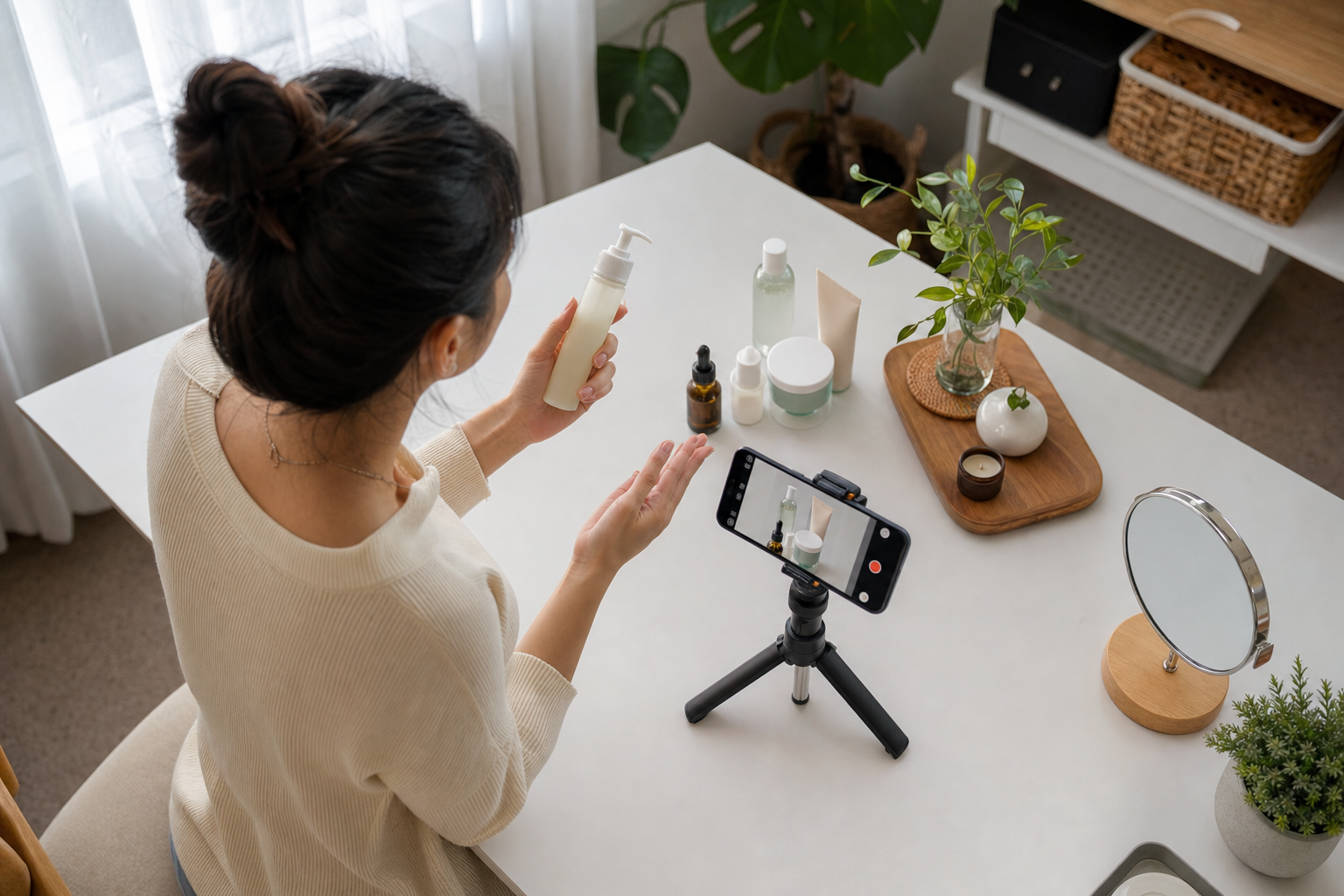
There are a few things every UGC portfolio needs to have:
- Three to five video samples across different formats: unboxing, testimonial, lifestyle b-roll. Variety shows range; a single video type suggests you only know one mode.
- A short bio covering your niche and the types of brands you work with, so a brand manager knows immediately whether you're relevant to their product.
- A direct contact or booking link. If they have to hunt for a way to reach you, most won't bother.
For hosting, Canva is the easiest starting point. Free UGC portfolio templates let you drop in video thumbnails, bio copy, and links without any design background. Notion and Google Drive work fine for quick sharing, but a Canva portfolio looks professional enough to send cold to a brand manager without apology. Once you're ready to set rates, check out this pricing guide before your first negotiation.
One rule worth following: keep it scannable. Brand managers move fast. If your niche and samples aren't clear within ten seconds, they move on.
Where to Find Paid UGC Creator Jobs and Gigs
Beyond the marketplaces already covered, a few channels are worth adding to your outreach mix. JoinBrands and Minisocial operate differently from Fiverr: brands post active campaigns, creators apply, and there's no cold pitching required. Approval is based on your portfolio fit for the specific brief, which levels the playing field for beginners.
Reddit threads like r/UGCcreators and r/creators are also worth monitoring. Brands and agencies post paid opportunities directly there, often with faster turnaround and less competition than formal job boards.
Here are a few other job sources to keep on your radar:
- LinkedIn job search: filter for "UGC creator" or "content creator" roles posted by DTC brands and agencies actively building content pipelines.
- Instagram DMs: reach out directly to brands whose aesthetic matches your existing portfolio work.
- Upwork: project-based contracts with set deliverables, useful for building consistent income while you grow your client roster.
For setting rates across any of these channels, the pricing guide from Launchpoint covers what creators are actually charging per video, per package, and at different experience levels.
Pricing Your UGC Content and Negotiating Usage Rights
Beginners often charge too little because they're not sure what the work is worth. Here's a starting framework to correct that.
UGC rates typically follow a tiered structure based on experience and deliverable type. Raw content (filmed and edited clips with no posting requirement) runs between $75 and $150 per video for new creators. Once you have a portfolio and a few brand deals behind you, that range shifts to $150 to $350 per video. Usage rights are where most creators leave money on the table.

Understanding Usage Rights
Usage rights are a licensing fee you charge when a brand wants to run your content as a paid ad. A standard 30-day usage fee commonly adds 20 to 30% on top of your base rate, and a 90-day buyout often runs close to double that base rate, though exact terms vary by deliverable and brand. Check out the UGC pricing guide for a full breakdown of how to structure these fees by deliverable and usage window.
- Organic-only rights cost the least and cover social posting with no ad spend behind it.
- Paid usage rights apply when the brand boosts or whitelists the content.
- Exclusivity clauses, where you agree not to work with competitors, typically command a premium of 25 to 50% above your base rate, depending on the category and how many competitors the exclusivity covers.
How Managed Creator Networks Simplify the UGC Process
Hiring individual creators one by one is slow, expensive, and inconsistent. Managed creator networks solve that by connecting brands with vetted UGC talent through a single point of contact, handling contracts, briefs, revisions, and payments in one workflow.
For Canvas UGC creators, this matters because networks are often where the steadiest work comes from. Instead of cold-pitching brands on Fiverr or waiting for inbound inquiries, you get matched with campaigns that fit your niche and rate.
Here's what a managed network typically handles for you:
- Onboarding and profile matching so brands find you based on content style, niche, and audience fit — handled through Launchpoint's ecommerce solutions page
- Brief delivery and revision rounds managed through a centralized system, cutting the back-and-forth that kills solo freelance timelines
- Payment processing and contract management, so you get paid on schedule without chasing invoices
For a full breakdown of what to charge and how networks factor into your pricing guide, that resource covers rate structures in detail.
Final Thoughts on UGC Creator Earnings
Canvas UGC creators earning $5,000 to $10,000 monthly didn't start with a following or connections. They started with a portfolio, learned how to price usage rights, and treated this like actual client work from day one. Your first three spec videos matter more than your follower count ever will. Set up your Canva portfolio, get your rates right, and stop waiting for permission to call yourself a creator.
FAQ
Can I become a UGC creator without any followers or experience?
Yes. Brands hiring UGC creators care about content quality, not audience size. Your follower count is irrelevant — what matters is whether you can shoot clear, authentic footage and follow a creative brief. Film three to five spec ads using products you already own, package them in a free Canva UGC portfolio template, and start applying to jobs on Fiverr or creator networks.
How much should I charge for UGC content with paid ad usage rights?
Usage rights are where most creators leave money on the table. A standard 30-day usage fee adds 20-30% on top of your base rate, while a 90-day buyout can double it. For example, if your base rate is $200 per video, a 30-day paid usage license should be priced at $240-$260.
How much do UGC creators charge per video in 2026?
Beginner creators charge $50-$150 per video, intermediate creators charge $200-$350, and experienced creators charge $500-$2,500+ depending on usage rights and niche. Finance, health, and SaaS content commands higher rates than general lifestyle work because fewer creators can speak credibly to those audiences.
What's the difference between Canvas UGC and traditional influencer marketing?
Canvas UGC creators get paid for the content itself — video files brands can use in their own ads and social channels. Influencers get paid for their reach and post to their own audiences. You don't need followers to do UGC work because the brand owns the content and controls distribution.
How much should I charge for whitelisting or exclusivity as a UGC creator?
Whitelisting fees (running ads through your social account) commonly add 20-30% per month on top of your base rate, though exact terms vary by brand and platform. Exclusivity clauses, where you agree not to work with competitors, should carry a 25-50% premium above your base rate depending on the duration and category restrictions.