Remove Bot-Farm Regions From Creator Campaigns
Learn to filter bot-farm regions from creator campaigns with layered controls. Keep spend clean in September 2026.


When was the last time you checked where a creator's likes and comments actually came from before signing them? Most rosters get built on stated reach, then the fake activity shows up in the post-mortem after the spend is gone. Bot farms cluster in cheap-labor markets and proxy hubs, so geography gives you a real signal to work with. Here's how to screen those regions early, without blanket-blocking the genuine audiences that live there too.
TLDR:
- Bot farms and click farms cluster in low-wage regions, inflating likes, views, and reach you pay against.
- Invalid traffic wasted roughly $63B in ad spend last year, and 81% of marketers hit influencer fraud.
- Watch for engagement from irrelevant countries, audience-location gaps, and burst timing before you trust a creator.
- Filter across four layers: creator vetting, platform targeting, attribution, and payment verification before money moves.
- Launchpoint runs region and fraud screening inside a managed workflow, gating payout on verified performance.
What a Bot Farm Is and Why It Distorts Creator Campaigns
A bot farm runs large banks of devices, accounts, or automated scripts to manufacture engagement at scale. A click farm does the same with low-wage human workers on real phones, clicking ads, liking posts, and following accounts to produce activity that looks legitimate but delivers no real value.
In a creator campaign, that machinery inflates the numbers you pay against. Likes, comments, and fake views in UGC campaigns climb with no real viewer behind them. A creator looks more valuable than their true reach supports, and a region reads like a hot pocket of demand when it is a room full of phones. The dashboard shows performance. The performance is manufactured.
How Bot Farm Activity Concentrates in Specific Regions
Click farms cluster where labor is cheap. Operators run rooms of phones in developing countries, paying workers pennies per task, so activity pools in a handful of low-wage markets. Data-center ranges and residential-proxy hubs add more concentration. The patterns show up in traffic: unusual volume from a region with no reason to care about your UGC content strategy, engagement spikes mapping to known farm locations.
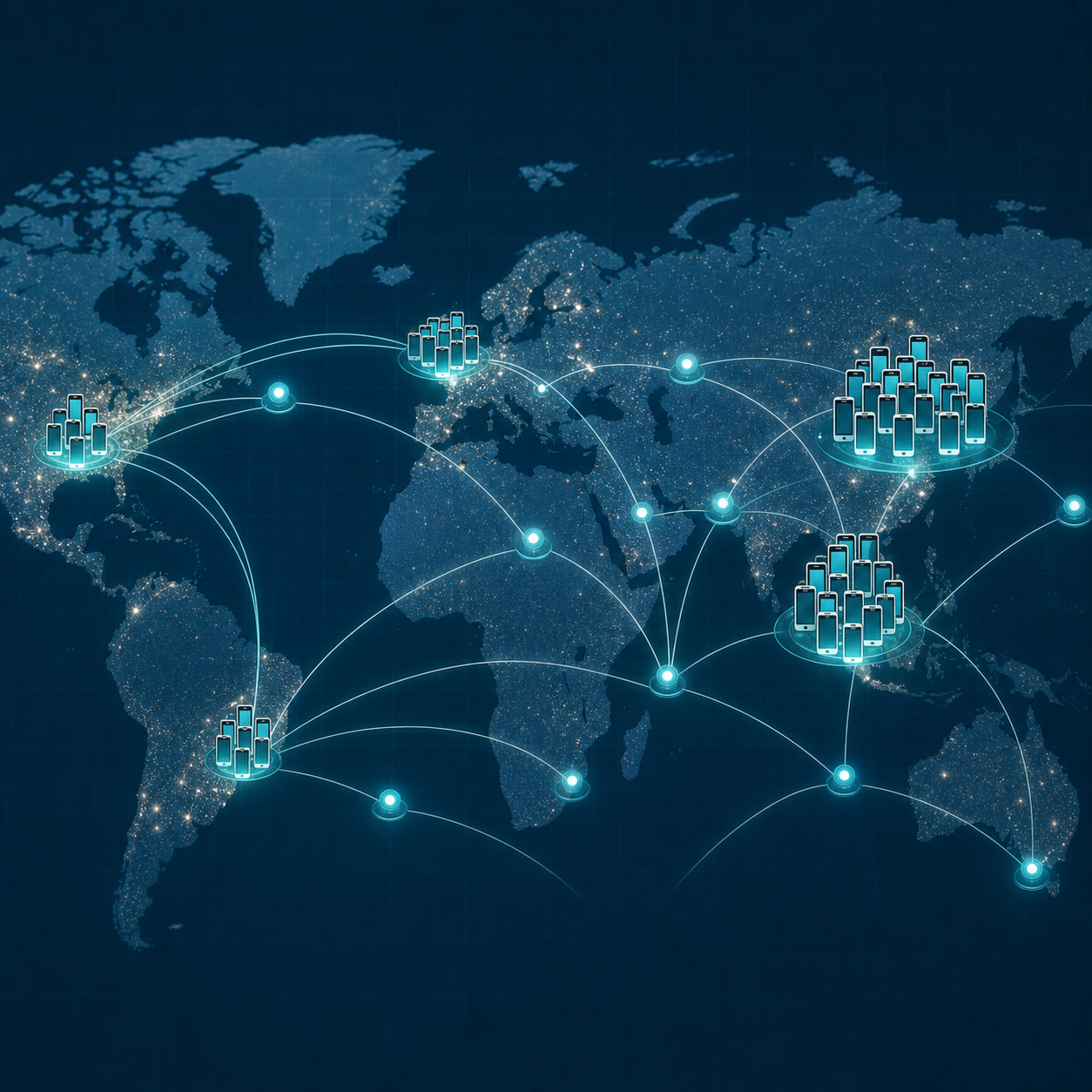
Geography is a useful signal, but not airtight. Residential proxies route traffic through everyday connections, with Black Lotus Labs tracking nearly 20 million distinct IPs per day across malicious proxy botnets. A "US" impression can originate somewhere else. Treat location as one input, not a verdict.
The Real Cost of Bot-Farm Traffic to a Creator Program
The damage lands in three places.
First, wasted budget. You pay for reach and clicks no real person generated. Across six ad platforms last year, roughly $63 billion in global ad spend went to invalid traffic.
Second, corrupted data. Fake engagement feeds your optimization, so budget moves toward creators and creatives that only look like winners.
Third, audience contamination. Bot interactions seed your retargeting and lookalike pools, teaching the algorithm to chase more of the same.
The stakes sharpen in creator work. A World Federation of Advertisers study found 81% of marketers hit influencer fraud in the past 12 months, with median waste near $128,000 per mid-scale program. One inflated creator skews an entire campaign readout.
Geographic Red Flags That Signal Bot-Farm Involvement
Watch for a handful of patterns before you trust a creator's numbers:
- Engagement or audience spikes from countries with no connection to your product, offer, or shipping footprint.
- A gap between where the creator says their audience lives and where the likes, comments, and views actually originate.
- Dense clusters of activity from a single city or network range, where many interactions trace back to the same small footprint.
- Odd timing, where engagement fires in tight bursts locked to one time zone that does not match the creator's stated audience.
None of these prove fraud on their own. Real diaspora audiences and traveling followers produce foreign activity too. Treat each flag as a prompt to look closer, then corroborate before you pay.
How Geographic Filtering Works in Creator Campaigns
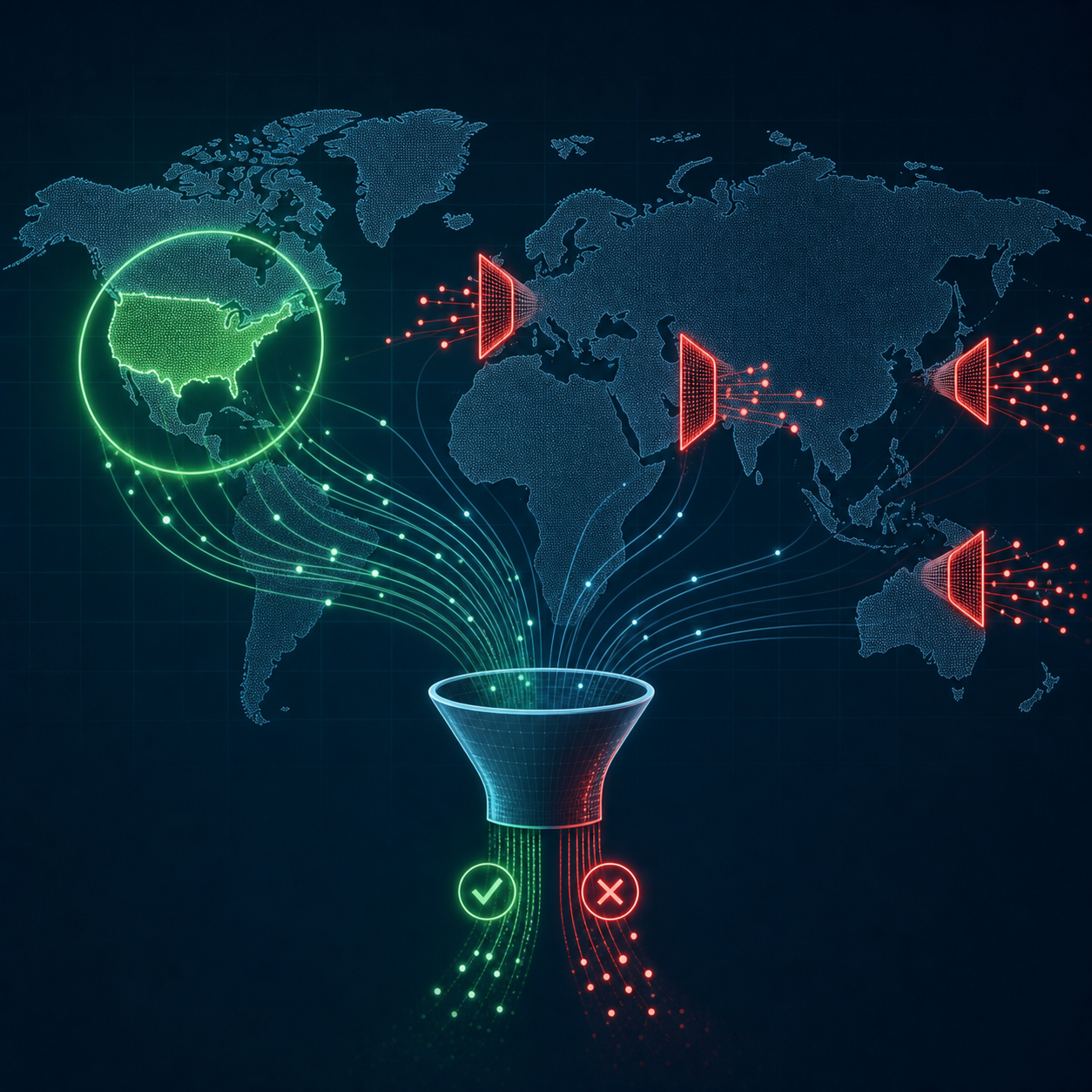
Geographic filtering means setting rules about which locations count. You define regions, then decide whether campaign eligibility, engagement counting, or ad delivery applies. Activity from excluded locations stops feeding your targeting and attribution.
Two structures do the work:
- Allow-lists count only approved regions, dropping everything outside them. This fits campaigns tied to a specific market, like a US retail launch or single-country offer, where anything foreign is noise by default.
- Block-lists exclude known-bad regions and count the rest. This fits broad or international programs where you want wide reach but need to strip out documented farm hubs and proxy ranges.
Pick the allow-list when your market is narrow and defined. Pick the block-list when reach is wide and you are screening out specific risks.
Filtering layer | Where it acts | What it protects | Lead with when |
|---|---|---|---|
Creator vetting | Before you sign, screening where a creator's audience actually lives | Keeps farm-heavy accounts off the roster | You pay creators on performance |
Platform targeting | At delivery, including or excluding countries and regions in TikTok and Meta ads | Keeps paid spend off flagged locations | You buy media |
Analytics and attribution | In reporting, filtering out excluded regions | Stops fake activity shaping optimization and lookalike pools | Fake engagement is skewing your reads |
Payment verification | Before money moves, confirming view geography | Protects payout on view or performance deals | You pay on views or performance |
Where to Apply Geographic Filters Across the Campaign Stack
Filtering works best as layers, because no single control catches everything.
- Hiring UGC creators and vetting them. Screen where a creator's audience actually lives before you sign, so farm-heavy accounts never enter the roster.
- Platform targeting. TikTok and Meta UGC ads tools include or exclude countries and regions at delivery, keeping paid spend off flagged locations.
- Analytics and attribution. Filter excluded regions in reporting, so fake activity stops shaping optimization and lookalike pools.
- Payment verification. For creators paid on views or performance, confirm view geography before money moves.
Combining Geographic Filtering With Other Detection Signals
Country blocking alone breaks both ways. Block a region and you cut real diaspora followers. Trust a region and proxy-masked bots slip through wearing a local IP. Geography is one layer, and it needs company.
Stack it with:
- IP intelligence, which flags data-center ranges and residential-proxy hubs behind a clean-looking location.
- Device fingerprinting, which catches many "users" running off the same hardware.
- Behavioral analysis, which reads timing, scroll, and interaction patterns automated activity struggles to fake.
- Engagement-quality checks, which weigh comment substance and follower ratios against raw counts.
Read agreement across layers, not any single flag. When IP, device, and behavior all point the same way, geography confirms the call instead of making it alone.
When Geographic Filtering Is the Wrong Move
Blanket country blocks cost you real people. Diaspora audiences follow brands from home markets. Travelers, expats, and creators who genuinely serve a region all get cut when you exclude a whole country. Over-filter and you distort your own data, shrinking the sample until reads on true performance get shaky.
For gray-area cases, reach for something narrower than a wholesale block:
- Tighter engagement verification, weighing comment quality and follower ratios before you trust a region's numbers.
- Manual review of flagged creators, checking audience makeup against the account's story.
- Region-level flagging that routes activity to review instead of dropping it outright.
Block a country when the market is irrelevant to your offer. Verify when the audience is plausibly real.
A Practical Workflow to Screen Regions Before You Pay Creators
Run region screening as a sequence, and run it before budget commits.
- Define your real target geography. Name the markets that matter to the offer, ship footprint, or launch, so everything else reads as noise.
- Vet each creator's true audience geography before onboarding. Confirm where the audience actually lives against where the creator claims it does.
- Set filters at the targeting and attribution layers. Keep paid delivery off flagged regions and stop excluded activity from shaping optimization.
- Monitor engagement origin during the campaign. Watch for spikes that drift outside your defined markets.
- Gate payment on verified in-region performance. For UGC creator compensation by format and view pay, confirm geography before money moves.
Every step protects a specific dollar. Skip it and you find the leak in the post-mortem, after spend is gone. Region screening belongs in the brief.
How Launchpoint Builds Region Screening Into Managed Creator Campaigns
We run creator campaigns as a managed UGC service for brands. Recruitment, briefing, tracking, and payment sit in one system, so region and authenticity screening happens inside the workflow instead of scattered across spreadsheets and DMs.
That gives you a few concrete controls:
- Filter creators by traits including location, drawing on more than 93,000 primary creators with verified profiles as of our latest production snapshot, spanning TikTok, Reels, and Shorts.
- Automated fraud checks that detect duplicate videos, the same clip posted across accounts, missing tags or links, and suspicious metric changes.
- AI-extracted video analysis on every submitted clip, adding signal beyond raw counts.
Flexible pay models let you gate payout on tracked, measured performance instead of raw view counts, so region screening protects the money before it moves. When cost enters the conversation, our UGC creator rates pricing guide breaks down how that works.
Final Thoughts on Filtering Bot Farm Regions in Your Creator Campaigns
Where engagement comes from is one of the clearest tells you have, but it never stands alone. Define your markets, verify each creator's real audience, and confirm geography before payment so you protect every dollar. Layer these checks and you keep bot activity out of your optimization and your lookalike pools. Book a quick call and we can walk through where to start.
FAQ
What's the best way to filter out bot-farm regions from a creator campaign?
Run region screening as layered controls across creator vetting, platform targeting, analytics, and payment verification, since no single filter catches everything. Start where your money is exposed: if you pay creators on performance, lock down vetting and payment verification first; if you buy media, tighten platform targeting first.
Can I block bot-farm countries without cutting real diaspora followers?
Not with a blanket country block, which drops travelers, expats, and diaspora audiences along with the farms. For gray-area regions, use tighter engagement verification, manual review of flagged creators, or region-level flagging that routes activity to review instead of dropping it outright, and reserve full blocks for markets irrelevant to your offer.
Should I rely on geographic filtering alone to catch influencer fraud?
No. Residential proxies can route bot traffic through a clean-looking local IP, and a wholesale country block cuts real followers, so geography works as one signal among several. Stack it with IP intelligence, device fingerprinting, behavioral analysis, and engagement-quality checks, then act when the layers agree.
How does Launchpoint screen bot-farm regions in a creator campaign?
Launchpoint runs recruitment, briefing, tracking, and payment as one managed engine, so region and authenticity screening happens inside the workflow instead of across spreadsheets and DMs. You can filter creators by location across more than 93,000 primary creators with verified profiles, run automated fraud checks for duplicate clips and suspicious metric changes, and gate payout on tracked performance so screening protects the money before it moves. Our pricing guide breaks down how that works.
When should I run region screening in the campaign timeline?
Before budget commits, not in the post-mortem. Define your target geography, vet each creator's true audience before onboarding, set targeting and attribution filters, monitor engagement origin during the campaign, and confirm in-region performance before you pay, so every step protects a specific dollar instead of surfacing the leak after spend is gone.