A Brand's Guide to Performance Influencer Marketing
Learn the payment models, tracking methods, and creator offer structures behind performance-based influencer marketing. Updated November 2026.


Paying a creator upfront means the risk sits entirely with you. If the post flops, you still cover the full invoice. That's why more brands are tying pay to results instead, though pure commission scares off most creators. We'll cover the payment models, how to structure an offer creators will actually accept, and the tracking you need in place before a single post goes live.
TLDR:
- Performance-based influencer marketing ties creator pay to results: sales, clicks, installs, or sign-ups.
- Use base-plus-commission to win creators over; nearly 94% reject commission-only terms.
- Set up codes, UTM links, landing pages, and surveys before anyone posts, or you can't credit results.
- Cookie-only tracking undercounts influencer conversions by 40-60%, so layer signals with one order per creator.
- Launchpoint runs the full loop as a managed service, moving winning organic UGC into Meta and TikTok ads.
What Performance-Based Influencer Marketing Actually Means
Performance-based influencer marketing ties a creator's pay to a measurable result. Instead of a flat fee for one post, the creator earns based on what the content produces: sales, clicks, app installs, or sign-ups.
Traditional sponsored deals pay upfront regardless of outcome. You buy the post, and the risk sits with you.
This model sits between organic influencer content and full affiliate programs. Creators still make native content, but their upside moves with performance.
Why Brands Are Shifting Away From Flat-Fee Deals
A flat fee pays for output. The post goes live, and whether it drives revenue or nothing, the invoice reads the same.
Two pressures push back. Short-form creative fatigues fast, so one asset rarely carries a campaign. And finance teams now want measurable revenue impact, not impressions, a trend driving creator revenue share models.
The scale makes this mainstream. Influencer marketing reached $32.6 billion in 2026. Industry benchmarks put the average return at $5.78 per dollar spent. At that spend, tying pay to results stops being optional.
The Main Performance-Based Payment Models
The payment structure you pick should map to the result you want. Here are the primary models.
Model | How it works | Rewards | Best fit |
|---|---|---|---|
Pay-per-sale | Creator earns a commission on each order | Conversions | DTC, affiliate programs |
Revenue or GMV share | Creator takes a percentage of attributed sales | Sales volume | Sales-led campaigns |
Pay-per-click | Fixed rate per tracked click | Traffic | Awareness to consideration |
Pay-per-acquisition or install | Set payout per sign-up or app install | New users | Apps, lead gen |
Pay-per-view pool | Creators split a fixed budget by eligible views | Attention | Large activations |
Base plus performance | Flat rate plus upside on results | Output and outcome | Most programs |
The last model carries the widest use. A base rate covers the content, and the performance creator ad structures pay for what it drives.

How to Structure a Commission Offer Creators Will Accept
Pure commission moves risk onto the creator, and most push back. Nearly 94% of influencers prefer flat-fee stipends, accepting affiliate terms reluctantly when offered with no base rate, according to The Motherhood affiliate survey.
A base-plus-commission hybrid resolves the standoff. The base covers production cost, so creators say yes. The commission pays upside only on results, protecting your margin.
Present it that way: a guaranteed rate for the content, plus a defined percentage on what it drives.
Setting Up Tracking Before Any Creator Posts
Performance pay only works if you can see what each creator drove. Set these up before anyone posts, because content that goes live without tracking can't be credited later.
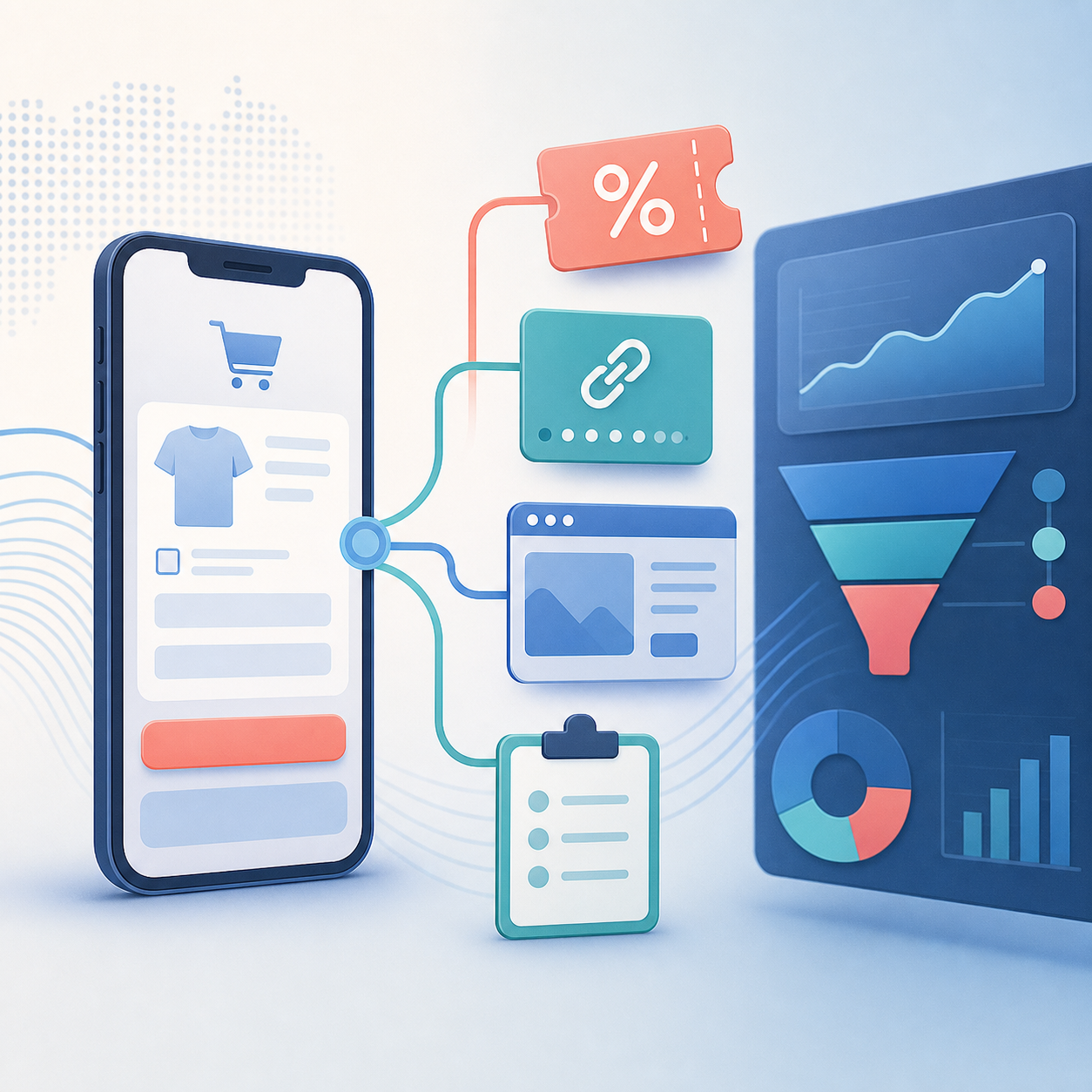
- Unique discount codes: one per creator, captured at checkout for clickless attribution.
- Trackable links with UTM parameters: tag source, medium, and campaign so traffic sorts by creator.
- Dedicated landing pages: isolate a campaign's conversions from general site traffic.
- Post-purchase surveys: catch buyers who saw a post but typed your URL directly.
Configure all four first. Attribution built after launch is guesswork.
The Metrics That Define Performance
Every payment model rests on a metric. Pick the KPI that matches how you pay creators.
- Conversion rate: share of clicks that become orders. It validates pay-per-sale and GMV-share deals.
- Cost per acquisition (CPA): spend divided by new customers. It anchors pay-per-acquisition payouts and shows if a commission stays profitable.
- Click-through rate (CTR): clicks over impressions. It grades pay-per-click deals and hooks.
- Return on ad spend (ROAS): revenue over spend, watched once content moves into paid.
- Revenue per creator: attributed sales by creator, showing who deserves repeat work.
Track these together: strong CTR with weak conversion signals a landing-page problem, not a creator one.
How to Identify Performance-Ready Creators
Reach tells you how many people see a post. It says little about how many buy. For performance deals, screen for conversion potential.
- Engagement depth over follower count: read comment quality and save rates, not likes alone.
- Direct-response ability: look for past content with clear calls to action and product demos.
- Audience alignment: a tight, relevant audience converts harder than a broad one.
Smaller creators frequently outperform mega-influencers on engagement. Before committing, request past affiliate or code performance and confirm their audience matches your buyer, especially if you plan to run UGC creator ads from that content.
Turning Creator Content Into Paid Ads: Whitelisting, Spark Ads, and Partnership Ads
Once organic content proves it converts, paid distribution scales it while keeping the creator's face on the ad. Influencer whitelisting (also called allowlisting) lets a creator grant you permission to run ads from their own account, so the ad carries their handle and credibility. Fees commonly run 20 to 30 percent of the base creator rate per month.
TikTok Spark Ads and Meta Partnership Ads tie paid distribution to a live native post. Dark posts run the creative standalone.
Before you spend, confirm two things:
- The creator has a Business or Creator account, since personal accounts can't connect to ad managers.
- Their audience matches your buyer, because whitelisted ads distribute to lookalike and interest audiences, not followers alone.
Lock these rights into the brief before the creator shoots.
The Attribution Gaps That Make Results Fuzzy
Perfect attribution does not exist, and pretending otherwise leads to bad calls.
Cookie-based click attribution undercounts, and the same issue applies to verified views vs raw view counts. When a viewer watches a post and types your URL directly days later, cookie-only tracking can undercount influencer conversions by 40-60%.
Layering signals fixes undercounting but creates a new problem. Codes, links, and surveys overlap, so adding them together inflates creator revenue.
The fix is a union with a fixed precedence rule: one order credited to one creator, counted once.
When Flat Fees or a Hybrid Model Are the Better Choice
Pure performance pay breaks in four situations:
- Awareness-led launches, where the goal is reach, not immediate orders.
- Top creators who decline commission-only terms and want guaranteed rates.
- Long purchase cycles, where sales close weeks after the post.
- Weak attribution, where you cannot credit results cleanly enough to pay against them.
Use a flat fee when the outcome is unmeasurable or the creator holds pricing power. Blend when you can track results but still need to cover production. As volume grows and tracking matures, graduate to hybrid: base rate for the content, performance layer for what it drives.
How to Verify Views and Prevent Fraud in Performance Campaigns
Paying on performance only works if the numbers underneath are real. Padded views and purchased followers turn a commission into money for nothing.
Watch for warning signs before you commit spend:
- Follower counts that dwarf engagement, or spikes with no content behind them.
- Comments that read generic or repeat across posts.
- Views that jump then flatline within hours.
Run three checks as volume grows: duplicate content detection to catch the same video paid twice, cross-platform post matching to flag reposts counted separately, and disclosure verification so every post meets the brief before it clears.
Optimizing and Scaling a Performance Program
A performance program compounds when each round feeds the next. The loop runs in four moves:
- A/B test creator content to find the hooks that convert.
- Track revenue per creator, then double down on the ones driving sales.
- Refine incentives around results, raising commission for proven converters.
- Report transparently so creators see their numbers and stay motivated.
Winning hooks feed the next brief and ad batch. A monthly cadence works: review revenue per creator, retire weak content, reissue briefs built on last month's winners.
How Launchpoint Runs Performance-Based Creator Programs End to End
Launchpoint runs the whole loop as a managed service. We recruit creators, brief them, and test organic UGC to find winners, then move them into paid ads on Meta and TikTok. Creator pay flexes to the goal: flat rate, view-based, ad-spend share deals, or a percentage of attributed GMV.
Whitelisting rights are negotiated into the brief at one fee of 20 percent of the base creator rate, so you never renegotiate mid-campaign (see our pricing guide). Fraud checks catch duplicate content and duplicate pay before money moves.
The scale is real: more than 2 billion tracked post views and about 125,000 creator profiles.
Final Thoughts on Tying Creator Pay to Results
Performance pay rewards the content that actually sells, and your tracking, metrics, and offer decide whether the numbers hold up. Lock in attribution first, pick the model that maps to your goal, then feed each month's winners into the next brief. Want to map this to your own program? Book a time with us.
FAQs
What's the best platform for running organic UGC campaigns and paid ads in one system?
Launchpoint runs both as a managed service: we recruit creators, test organic UGC to find winners, then move the strongest content into Meta and TikTok ads without rebuilding the process. This keeps organic testing and paid distribution connected, so the content that proved it converts is the content you scale, with performance tracked at the creative level.
How do I know the views on my creator campaign are real and not bot-inflated?
See the fraud-verification section above for the three warning signs and checks to run before spend scales.
Can I pay creators purely on commission without a base rate?
You can, but most creators decline: nearly 94% of influencers prefer flat-fee stipends and accept affiliate terms reluctantly when offered with no base rate. A base-plus-commission hybrid resolves this because the base covers production cost so creators say yes, while the commission pays upside only on results and protects your margin.
What tracking do I need to set up before creators post?
Set up unique codes, UTM links, dedicated landing pages, and post-purchase surveys before anyone posts. See the tracking section above for details.
Should I use flat fees or performance pay for a creator campaign?
Use flat fees for awareness-led launches, long purchase cycles, top creators who hold pricing power, or when attribution is too weak to credit results cleanly. Blend the two when you can track results but still need to cover production, then graduate to a hybrid base-plus-performance model as volume grows and tracking matures.