Affiliate vs Influencer Marketing Pay Models
Affiliate pays after the sale; influencer pays on delivery. Pick the right pay model for your margins and goals in November 2026.


You've got the budget approved and now you're deciding how to spend it: commission per sale, or a flat fee before anything posts. The two models move money at different times and hand the risk to different people. The right fit saves budget and protects your launch window. We'll walk through when each one wins.
TLDR:
- Affiliate pays commission only on confirmed sales; influencer pays a flat fee upfront for reach.
- Pick affiliate for trackable, low-risk sales; pick influencer for awareness, launches, and social proof.
- 41% of affiliates earn under $1,000/month, while B2B SaaS influencer programs average $5.20 return per dollar.
- Both models require FTC disclosure, and you as the advertiser carry liability for missing tags.
- Hybrid deals stack a base content fee with commission, rewarding creators for content that converts.
What Affiliate Marketing Is and How It Works
Affiliate marketing is a performance-based model. A partner promotes your product, and you pay a commission only when their referral produces a result: a sale, a lead, or a signup. No sale, no payout.
Tracking runs on unique links or promo codes tied to each partner. A click drops a cookie, and the sale gets credited if the purchase lands inside the attribution window, which now runs short. AM Navigator's 2026 survey found 38% of programs use a 7-day or shorter window.
Commissions vary by category. Ecommerce programs typically pay a percentage of order value, while SaaS programs often pay a larger recurring share of first-year revenue.
The economics are the draw: you spend against confirmed results, not promised reach.
What Influencer Marketing Is and How It Works
Influencer marketing pays a creator for their reach, content, and audience trust. You agree on a price before anything posts, so the exchange is upfront: you get reach and social proof, and the creator gets paid whether or not a sale lands.
Payment usually takes one of three shapes: a flat fee per post, gifted product in exchange for content, or a content-plus-usage deal where you also license the footage for your own channels.
Creators sort into tiers by audience size, and the smallest tiers are where micro-influencer platforms concentrate:
- Nano (1K to 10K): small reach, high engagement and trust.
- Micro (10K to 100K): niche pull with solid conversion.
- Macro and above (100K+): broad reach, lower intimacy.
Payment Models Compared: Commission vs Flat Fee
The split comes down to when money moves and who carries the risk. Affiliates get paid after a sale clears, so your cost tracks confirmed revenue. Influencers get paid on delivery, so you commit budget before anything converts.

That timing shapes your risk. Commission spend can't run past your margin, since payouts are a slice of each sale. Flat fees are fixed costs negotiated upfront, and they climb with follower count.
If cash flow is tight and you want spend tied to results, commission fits. If you need guaranteed reach on a date, the flat fee is the cleaner buy.
Factor | Affiliate (commission) | Influencer (flat fee) |
|---|---|---|
When money moves | After a sale clears | On delivery, before conversion |
Who carries the risk | The partner (no sale, no payout) | You, the advertiser |
Funnel position | Bottom funnel (measurable sales) | Top funnel (awareness, launches) |
Cost ceiling | Capped at your margin (a slice of each sale) | Fixed fee that climbs with follower count |
Predictability | Swings hard (41% of affiliates earn under $1,000/month) | Forecastable fixed line item |
Best when | Thin margins, trackable low-risk sales | Guaranteed reach on a fixed date |
Goals and Search Intent: Conversions vs Awareness
The two models answer different questions. Affiliate marketing lives at the bottom of the funnel, where the goal is a measurable sale and every dollar maps to a confirmed transaction. Influencer marketing sits higher up, built for awareness, product launches, and brand storytelling that gets people to know you before they buy.
The "which is better" question turns on your objective:
- Need immediate, trackable sales? Affiliate serves that, paying only against confirmed transactions.
- Building long-term brand equity or launching something new? Influencer fits, buying reach and recognition ahead of the purchase.
If your primary goal is a tracked sale this quarter, start with affiliate; if you need reach before a product drops, book the influencer first.
How to Measure Success in Each Model
Affiliate measurement is clean. Every payout ties to a tracked action, so you report clicks, conversion rate, revenue per partner, and cost per acquisition straight from the dashboard.
Influencer measurement blends direct response with brand lift, and the softer half is where teams stall. B2B SaaS influencer programs average $5.20 return per dollar spent, yet 86% of marketers struggle to prove that return in boardrooms.
A working framework:
- Affiliate: clicks, conversions, CPA, revenue per partner.
- Influencer: promo-code sales and link clicks for direct response, plus reach, engagement, and search-volume lift for the brand half.
Cost, Budget, and Risk Trade-offs
Risk placement is the sharpest difference. Affiliate marketing pushes financial risk onto the partner, who only earns when a sale clears. Influencer marketing puts your budget on the line first, with no guaranteed return once the fee is paid.
That trade shapes predictability. Flat fees are a fixed line item you can forecast. Affiliate income swings with attribution windows and partner effort, so payouts are harder to project. Shorter attribution windows sharpen this, since sales outside the click window go unpaid.
So allocate by margin and appetite. Thin margins and low risk tolerance point to affiliate. Room to spend against reach points to influencer.
Content and Partnership Dynamics
The working relationship differs as much as the payment. Influencer partnerships are content-led and relationship-driven: you brief a creator, shape the creative together, and come back for repeat posts. Affiliate relationships lean transactional and volume-based, where partners push links across many products and you rarely coordinate on creative.
The same creator can run in both modes, posting a paid launch video one month and dropping affiliate links the next. The difference shows in the output. A creator you work with repeatedly makes content audiences see before the ask, which compounds in a way a one-off affiliate placement never does.
Compliance and Disclosure Requirements for Both
Both models trigger the same rule. Any material connection between a brand and a creator has to be disclosed under the FTC influencer disclosure rules, whether the creator earns a commission on a tracked link or a flat fee for a single post. The standard is clear and conspicuous: easy for an ordinary viewer to catch.
Here is the part that lands on you, not the creator. As the advertiser, you can be held liable for a missing disclosure on a post you paid for, whether or not you ever saw the caption.
A baseline for either model:
- Require an unambiguous tag (#ad or #sponsored) placed where viewers see it without tapping "more."
- Use spoken or on-screen disclosure in video, and do not rely on the caption alone.
- Put the disclosure requirement in the brief before the creator shoots.
When to Use Affiliate Marketing vs Influencer Marketing
Pick the model that pays against your goal.
Choose affiliate marketing when you want measurable sales, low upfront risk, and partnerships that scale without renegotiating each deal. It fits thin margins and bottom-funnel targets.
Choose influencer marketing when you need awareness, launch momentum, or content and social proof ahead of the buy.
Run this quick self-assessment:
- Is your primary goal a tracked sale or brand recognition?
- Can you commit budget before conversion, or only after?
- Do you need reach on a fixed date, or steady volume over time?
Your answers point to the model.
Combining Both: The Hybrid Model
The two models stack. A hybrid deal pays a base content fee upfront, then layers commission or revenue share on top, so you capture awareness at signing and measurable sales after the post runs.
The structure is straightforward:
- Base fee covers the content and reach, giving the creator guaranteed pay.
- Performance layer, commission per sale or a share of attributed revenue, rewards conversions on top.
That layering changes creator incentives. A flat fee pays for output. Adding a cut of sales gives the creator a reason to make content that converts, not content that only clears approval.
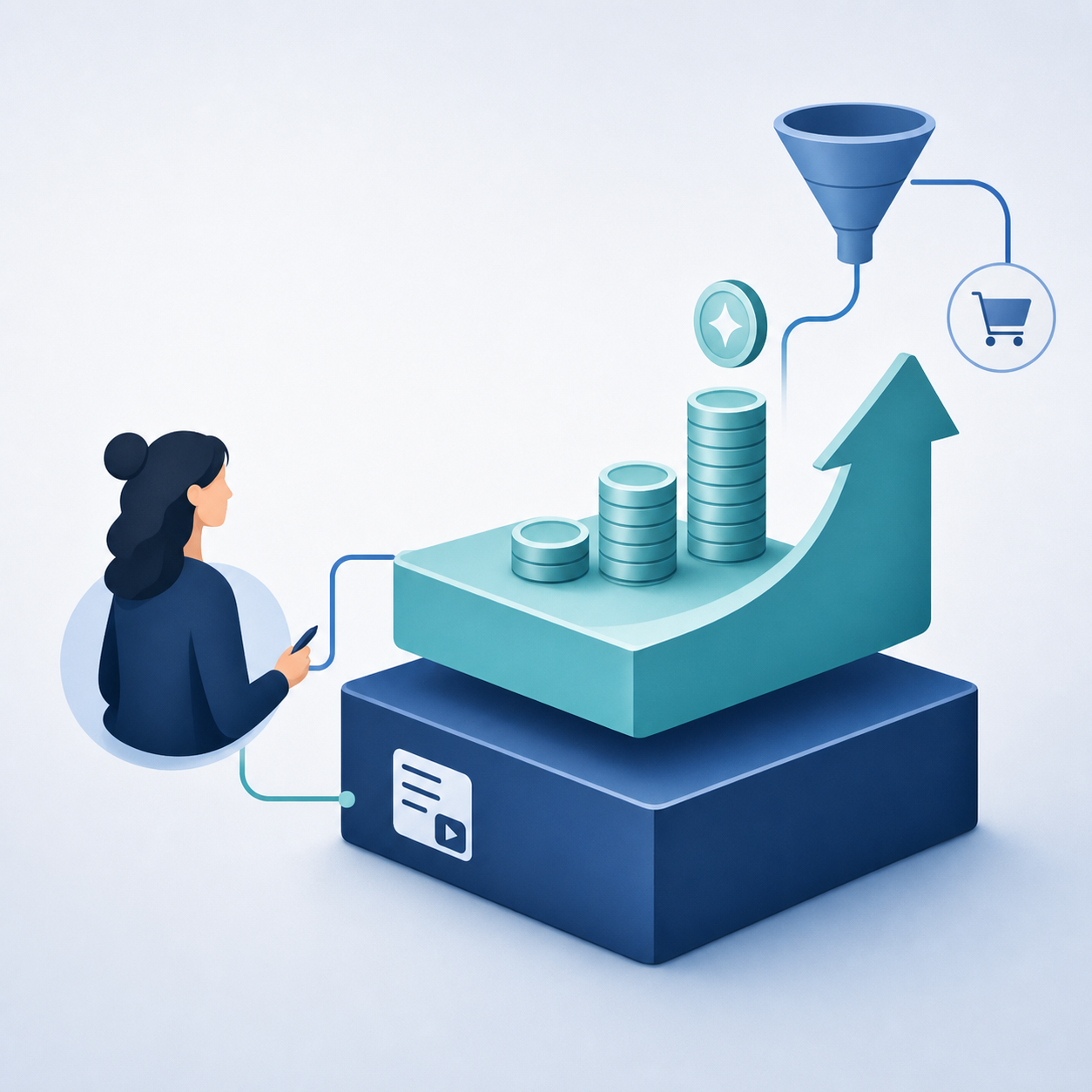
The blueprint: negotiate the base against reach, set the performance rate against your margin, and track both from one attribution source.
How Launchpoint Blends Content, Paid Ads, and Performance Pay
The hybrid model runs cleaner inside one system. Launchpoint is a managed creator-marketing engine connecting organic UGC, paid ads, tracking, and creator pay, so you skip choosing between awareness-first and sales-first.
We support flat rates, view-based pay, ad-spend share, and a share of attributed GMV, so you reward the creators whose content drives sales. Influencer whitelisting graduates proven organic posts into paid ads at a set CPM.
That runs across about 125,000 creator profiles and 2B+ tracked post views (Launchpoint network data). You approve or reject; we handle the deals, tracking, and payouts.
Final Thoughts on Affiliate and Influencer Marketing
Your choice hinges on when money moves and who carries the risk: affiliate pays after the sale, influencer pays on delivery. If your margins are thin, affiliate fits; if you need reach on a date, the flat fee is cleaner; and a hybrid gives you both. Pick the model that pays against your goal, then run it. Book a quick call if you want help structuring the deal.
FAQs
What's the best way to reward creators whose content actually drives sales instead of likes?
Use a hybrid pay structure: a base content fee plus a performance layer tied to attributed sales. Launchpoint supports flat rates, view-based pay, ad-spend share, and a share of attributed GMV from one system, so a creator earns for approved content and again for the sales their ads produce.
Affiliate marketing vs influencer marketing: which one drives more sales?
Affiliate marketing drives more direct, trackable sales because it lives at the bottom of the funnel and pays only against confirmed transactions. Influencer marketing drives awareness and social proof higher up the funnel, so the model that "drives more sales" depends on whether your goal is an immediate tracked purchase or building recognition ahead of the buy.
Can I run both affiliate and influencer marketing in one campaign?
Yes. See the Combining Both section above for the full hybrid structure; Launchpoint runs content, tracking, and payouts across roughly 125,000 creator profiles while you approve or reject.
Am I liable for FTC disclosures on posts I paid for?
As the advertiser, you can be held liable for a missing disclosure on any post you paid for, whether or not you saw the caption. Require an unambiguous tag like #ad placed where viewers see it without tapping "more," use spoken or on-screen disclosure in video, and put the disclosure requirement in the brief before the creator shoots.
How do I measure success differently for affiliate vs influencer campaigns?
Affiliate measurement is clean: track clicks, conversion rate, CPA, and revenue per partner straight from the dashboard. Influencer measurement blends direct response (promo-code sales, link clicks) with the softer brand half (reach, engagement, search-volume lift), which is where 86% of marketers struggle to prove return.