How Much Do Athletes Get Paid for Commercials
Learn what athletes earn from commercials in August 2026. College athletes make $500-$2K per post while pros command $500K-$10M+ annually. Real payment data…


Most brands underestimate the gap between what college athletes get paid for commercials and what celebrity athletes command. A mid-tier college athlete with 50,000 followers earns around $500 to $2,000 per sponsored post, while elite professionals like Messi pull $135 million a year from endorsements. That's more than a scale problem. The deal structures, exclusivity terms, and performance metrics are completely different depending on whether you're working with a nano creator or negotiating a multi-year contract. We'll break down what drives those payment differences across professional, Olympic, and college athletes in 2026.
TLDR:
- Athletes earn $500-$5,000 per post with under 100K followers; elite pros command $500K-$10M+ annually.
- Olympic athletes rely on commercials as primary income since IOC doesn't pay competitors.
- College athletes can now earn through NIL deals, with $1.65B expected across sports in 2024-25.
- Small athlete creators deliver higher conversion rates than celebrity athletes despite lower reach.
- Launchpoint automates athlete partnerships across 20K+ verified college creators with 24-hour campaign launches.
How Professional Athletes Earn Through Commercial Deals
Playing contracts are just the starting point. For elite athletes, the real money often lives in endorsements, commercial deals, and brand partnerships that run parallel to their sport.
Cristiano Ronaldo pulls in roughly $275 million annually, Lionel Messi around $135 million, and LeBron James approximately $125 million. A substantial portion of those figures comes from brands, not teams. These are structured arrangements: multi-year endorsement contracts with guaranteed fees, performance bonuses, and royalty agreements tied to product sales.
Geography shapes these numbers more than most people expect. Some industry estimates suggest North American athletes average about $18 million in commercial income, while Asian market athletes average $24 million, driven largely by population density and exclusive regional brand agreements, though these figures vary by source and methodology.
For professionals below that top tier, commercial income ranges far more modestly, shaped by sport visibility, social following, and market timing. Brands structure deals differently depending on whether they want a campaign face or a product ambassador who drives measurable sales. Those two goals carry very different price tags.
Olympic Athletes and Commercial Compensation
Olympic athletes operate under a fundamentally different financial model. The International Olympic Committee does not pay athletes to compete. No salary, no guaranteed appearance fee. For most Olympians, commercial endorsements are the income.
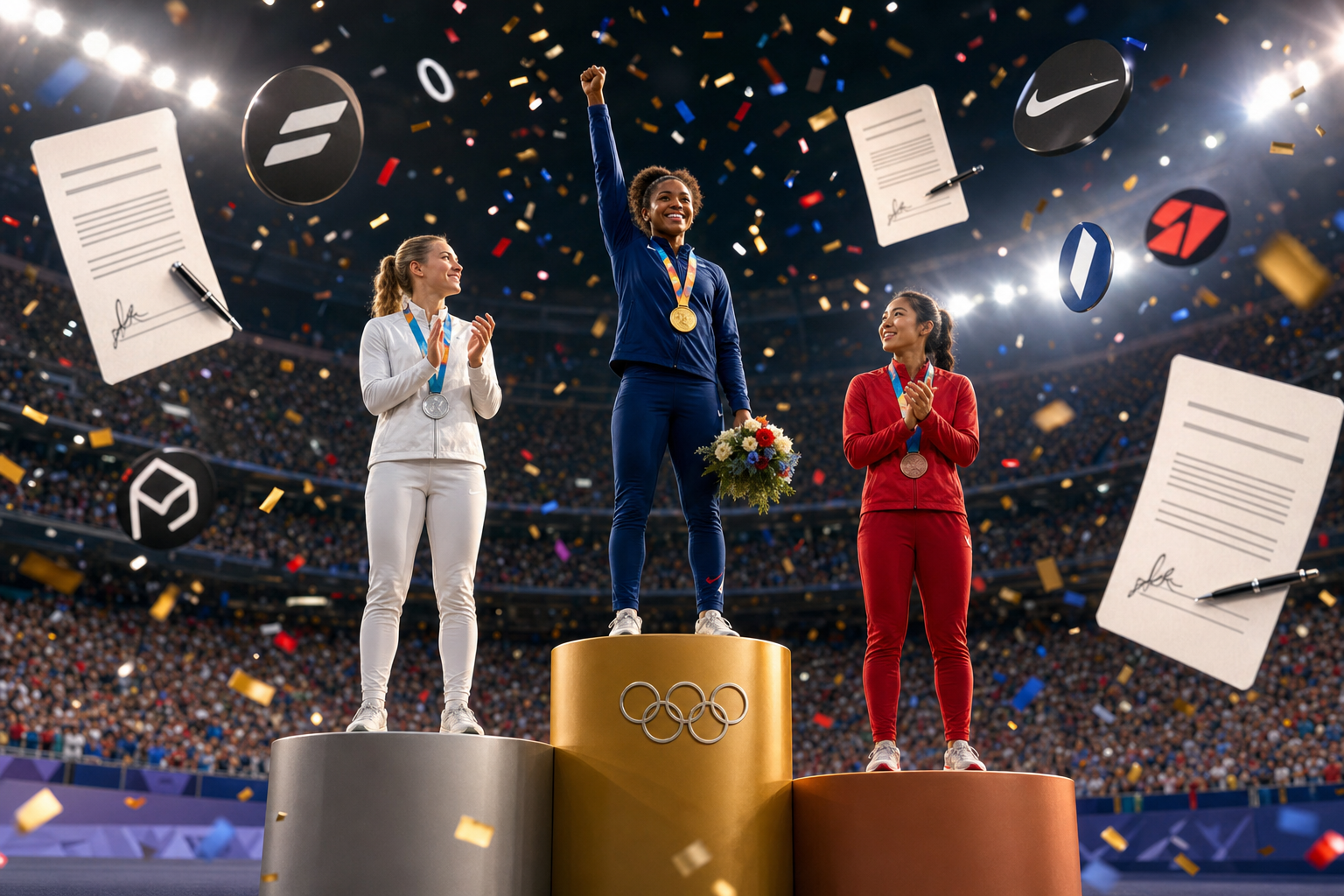
That makes the numbers matter more. Alpine skiers, gymnasts, and track athletes often spend four years training without a professional league salary to fall back on. A single endorsement deal can represent the majority of what they earn in an Olympic cycle.
What Olympic Athletes Actually Earn from Commercials
The range is wide, but the structure is predictable. Lesser-known Olympians with a strong showing at the Games might land deals worth $10,000 to $50,000. Athletes who medal and capture public attention can see that figure climb into six or seven figures quickly.
A few benchmarks worth knowing:
- Gymnasts like Simone Biles have reported endorsement portfolios worth over $10 million annually, with individual commercial deals accounting for a large share.
- Swimmers and track stars regularly command $500,000 to $3 million per campaign following a breakout Olympic performance.
- First-time Olympians without a medal rarely exceed $25,000 for a single commercial unless they carry strong social media reach into the deal.
Timing is everything here. Brands pay a premium for Olympic-cycle relevance, and most contracts are structured to align with that window.
How College Athletes Get Paid for Social Media and Commercials
Before 2021, college athletes couldn't earn a single dollar from their name or image. The NCAA's NIL rule change flipped that entirely. Now student athletes can sign brand deals, post sponsored content, and collect commercial fees while still competing at the collegiate level.
The 2025 House v. NCAA settlement pushed things further. Schools can now directly pay athletes up to $20.5 million annually, with most of those funds going to football and men's basketball programs. The broader market tells a bigger story: college athletes earned an estimated $1.65 billion in the 2024-25 academic year across all NIL activity.
For social media and commercial deals, payment varies by follower count and engagement rate more than sport alone. A college athlete with 50,000 engaged followers can realistically earn $500 to $2,000 per sponsored post. Athletes with niche, loyal audiences often outperform larger accounts on actual conversion, which changes what brands are willing to pay.
What Drives NIL Deal Value for College Athletes
A few factors determine where a college athlete lands on the pay scale:
- Follower count sets a baseline, but engagement rate is what brands actually care about.
- Sport visibility matters. Power Five football and basketball athletes attract the most inbound interest from brands.
- Niche audiences convert. A college swimmer with a tight-knit fitness following can command rates that surprise brands expecting to pay less.
Factors That Determine Athlete Commercial Payments
Beyond follower count and engagement, brands weigh several other variables before settling on a number. Audience demographics rank high on that list. An athlete whose followers skew 18-34 with real purchasing power is worth more to most consumer brands than one with identical reach but a younger, non-buying audience.

Exclusivity terms directly affect price. Asking an athlete to avoid competing brands for 12 months costs more than a one-time post. The more an athlete restricts their options, the more a brand pays for that access.
Personal brand consistency matters too. Athletes with a clear identity, whether that's fitness, lifestyle, or a specific sport niche, give brands a predictable context for their product. Vague personal brands create vague placements, and brands price that risk accordingly.
A few other factors brands consistently weigh:
- Cross-channel presence, particularly TikTok and Instagram combined, since multi-channel reach multiplies a brand's exposure without requiring separate deals.
- Prior commercial performance and content quality, because a proven track record of driving engagement reduces perceived risk for the buyer.
- Geographic reach, since regional deals often pay premiums for local market concentration where a national athlete's influence might not translate as well.
- How authentic the product fit appears to the athlete's existing content, as forced partnerships tend to underperform and brands have learned to price that downside in.
Small Creator Athletes vs. Celebrity Athletes in Brand Deals
There's a wide gap between what a college athlete with 10,000 followers earns versus what a household name like LeBron James commands. Understanding where that gap sits helps brands budget realistically and helps athletes set expectations.
Nano and micro-level athlete creators, those with followings under 100,000, typically earn between $500 and $5,000 per sponsored post. Mid-tier athletes with regional recognition or niche sport audiences can push that range to $10,000 to $50,000 per campaign. At the top, elite celebrity athletes are negotiating multi-million dollar annual contracts.
Here's what that looks like across tiers:
Athlete Tier | Follower Range | Typical Per-Post or Campaign Rate |
|---|---|---|
Nano/Micro Athlete | Under 100K | $500 to $5,000 |
Mid-Tier Athlete | 100K to 1M | $10,000 to $50,000 |
Elite/Celebrity Athlete | 1M+ | $500,000 to $10M+ annually |
Brands often get stronger engagement rates from smaller athlete creators despite the lower reach. Athletes deliver 3.7x higher engagement rates (5.6% vs 1.9%) than traditional influencers on social media platforms, with some platforms showing gains of 2x to 12x.
A niche sport audience that trusts an athlete's recommendation converts at a higher rate than a passive celebrity following. The tradeoff is scale versus depth of influence, and the right choice depends entirely on campaign goals.
Scaling Athlete Marketing Campaigns with Creator Networks
Running athlete marketing at scale breaks down fast when you're managing individual deals. Contracting, payouts, product shipping, tax forms, and approval chains multiply quickly across dozens of athletes, let alone hundreds.
Launchpoint's network of 20,000+ verified college athletes and creators removes that overhead. Brands set campaign parameters, approve content they like, and the rest happens automatically. Contracting, 1099s, product fulfillment, and creator payouts all run in the background.
There are a few things that make this work at scale:
- A trust score system filters out creators who take products without posting, so brands aren't burning budget on unreliable partners.
- In-app creative tools and AI quality checks produce better content without lengthy revision cycles that slow down traditional endorsement deals.
- Most campaigns go from intake to live in under 24 hours, and brands only pay for videos they approve.
That's a fundamentally different economics than managing celebrity endorsements one at a time.
Final Thoughts on Athlete Endorsement Economics
Understanding how much athletes get paid for commercials gives you a baseline, but the real decision is whether you need reach or conversion. Celebrity athletes give you impressions, micro-athletes give you sales, and most brands need some mix of both depending on where they are in their growth cycle. Your budget determines which tier makes sense, but your campaign structure determines whether you get results. If you're ready to test what athlete content can do for your brand, book 30 minutes and we'll map out a realistic approach.
FAQ
How much do Olympic athletes get paid for commercials?
Lesser-known Olympians typically earn $10,000 to $50,000 per commercial deal, while medalists who capture public attention can command $500,000 to $3 million per campaign. Elite athletes like Simone Biles have endorsement portfolios worth over $10 million annually, with the highest payouts tied directly to Olympic-cycle timing when brands pay premium rates for relevance.
College athlete with 50k followers vs professional endorsement deal?
A college athlete with 50,000 engaged followers earns $500 to $2,000 per sponsored post, while professional athletes at similar follower counts might command $10,000 to $50,000 per campaign due to proven market value. The gap narrows when college athletes have niche, loyal audiences that convert at higher rates than passive celebrity followings.
Can you run athlete marketing campaigns without managing individual contracts?
Yes. Creator networks like Launchpoint handle contracting, 1099s, product fulfillment, and payouts automatically across thousands of athletes. Brands set campaign parameters, approve content they like, and everything else runs in the background with most campaigns going live in under 24 hours.
What actually determines how much athletes get paid for commercials?
Engagement rate matters more than follower count, with 4% engagement on 40,000 followers worth more than 1% on 200,000. Exclusivity terms, audience demographics in the 18-34 purchasing range, cross-channel presence, and authentic product fit all directly affect pricing, with brands paying premiums for regional market concentration and proven content performance.
When do brands pay more for small athlete creators versus celebrities?
Brands pay more per engagement point when small athlete creators deliver higher conversion rates through niche, trusting audiences. Celebrity athletes command larger total deals for scale and reach, but athletes under 100,000 followers who convert at 3-5% rates often deliver better ROI on brand spend despite earning $500 to $5,000 per post versus celebrity rates of $500,000+.