Organic UGC to Paid Ads: The Scaling Playbook
September 2026 playbook for graduating winning UGC into paid ads. Covers signals, whitelisting, Spark Ads, and bulk creative scaling.


Raw follower count tells you reach, not whether a post will actually convert once you put spend behind it. So how do you know which organic winners deserve real budget, and which million-view video is just empty praise? The answer lives in the signals: saves, watch time, comment sentiment, and early velocity in the first 48 hours. Once you know which posts clear that bar, the rest is knowing how to run them as ads, lock down rights, and scale them fast. Here's the playbook for doing exactly that.
TLDR:
- Run organic content first to collect real signals, then put paid budget only behind posts that already earn watch time and saves.
- Judge posts on engagement rate, saves, and early velocity within 24 to 48 hours, never raw follower count.
- Lock whitelisting rights into the brief before the shoot, while you still hold pricing power.
- Influencer-identity ads (Spark Ads, Partnership Ads) beat brand-account ads by 20 to 30 percent on CAC, ROAS, and CPA, per Superfiliate.
- Launchpoint runs the full loop, graduating top organic Canvas posts into Meta and TikTok ads at a flat fee per video.
What "Organic-to-Paid" Actually Means for Social Ads
An organic-to-paid ads workflow is a sequential system, not two competing channels. Organic content goes out first and collects real signals: views, watch time, comments, saves. The pieces that earn genuine attention graduate into paid distribution, which is the core of any solid UGC content strategy for brands, where you put budget behind proven pull instead of guesses.
Organic reach shows you what an audience responds to for free. Paid amplification buys that winner more eyes. Same funnel, two stages, run again on every new batch of creative.
Why the Sequence Matters: Organic as the Proof Layer
Most wasted ad spend traces back to one decision: a media buyer picking the creative. You launch three polished concepts to cold traffic, guess at the hook, and let the algorithm burn budget learning what a free organic post would have told you in a day.
Organic performance removes the guess. When a post already earns watch time and saves from a real audience, you know the hook lands before a dollar moves.
Organic reach is slow and algorithm-capped. Paid accelerates what organic already proved, instead of testing cold.
Building an Organic Content Testing Engine
Every organic post is one test: a hook, a format, a message, a creator. Run one video and you learn nothing you can trust. Run thirty variations on the same product and patterns surface, which is the foundation of effective UGC ads from creator content.
Keep briefs tight so results compare. Fix the product and the call to action, then vary one lever at a time: swap the opening three seconds, the setting, or the creator's angle. Testing different types of creators reveals exactly which persona drives the highest conversion for your niche, so you stop guessing who your buyer trusts.
More posts in market means more qualified winners ready for paid.
How to Decide Which Organic Posts Deserve Paid Spend
Raw follower count tells you reach, not resonance. Judge posts on signals that predict paid pull:
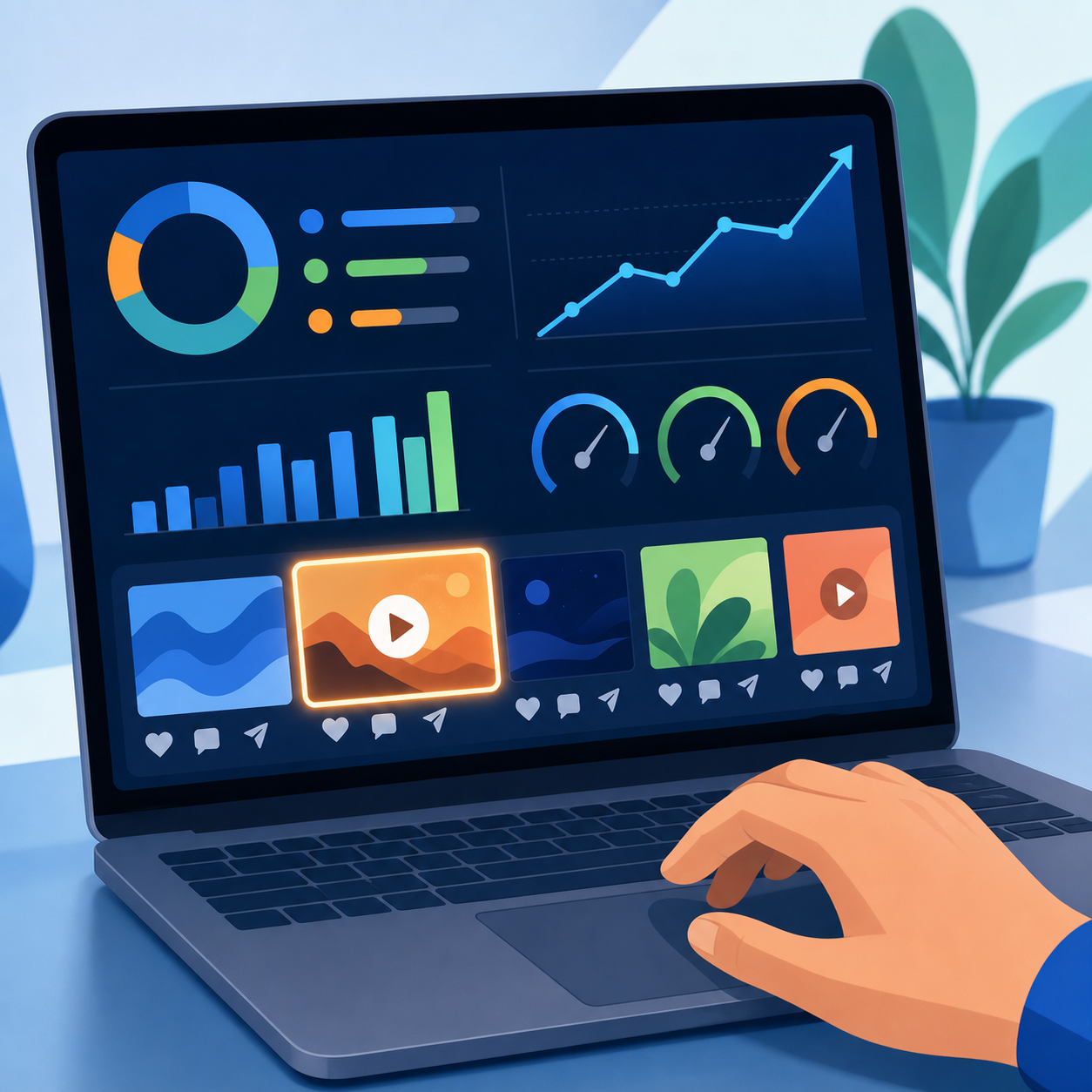
- Engagement rate against views, not follower count
- Watch time and completion, since retention drives paid delivery
- Saves and shares, the strongest intent markers
- Comment sentiment: questions about where to buy beat empty praise
- Early velocity in the first 24 to 48 hours
Skip the post with a million views and no saves, since fake views and bot engagement can inflate those numbers. The decision rule: if a post clears your engagement and save thresholds inside two days, graduate it.
Turning Winning Content Into Ads: Spark Ads, Partnership Ads, and Direct Uploads
Once a post clears the bar, you have three ways to run it as paid media.
- TikTok Spark Ads: the creator issues a Spark code, and the ad runs from their handle with all engagement intact.
- Meta Partnership Ads: the creator grants permission, and the ad carries their name and profile on Facebook and Instagram.
- Direct uploads: you push the file into your own ad account for full control over targeting.
Ad type | Platform | Permission needed | Whose identity runs the ad | Engagement carried over |
|---|---|---|---|---|
TikTok Spark Ads | TikTok | Creator issues a Spark code | Creator's handle | Yes, all engagement intact |
Meta Partnership Ads | Facebook and Instagram | Creator grants permission | Creator's name and profile | Creator identity attached |
Direct uploads | Your ad account | None, you own the file | Your brand account | No, full control over targeting |
The first two keep the creator's identity attached, why influencer ads commonly beat brand-account ads by 20 to 30 percent on CAC, ROAS, and CPA, according to operator reporting from Superfiliate.
Whitelisting and Usage Rights: What to Lock Down Before You Spend
Whitelisting (allowlisting) is permission to run paid ads from a creator's handle, so the ad carries their credibility instead of your brand account. Lock terms into the brief before the shoot, when you hold pricing power. Wait until content is live and the creator sets the rate.
A rights agreement covers:
- Usage duration, so you never run expired-rights creative
- Ad spend limits
- Geographic targeting restrictions
- Content approval rights
- Campaign end terms
Before you commit budget, verify first, spend second.
Managing Spark Codes and Ad Permissions Without the DM Chaos
A Spark code is the authorization a creator generates so you can run their TikTok post as an ad; Meta needs a parallel permission grant. Both expire, and a lapsed code stalls a launch mid-flight.
Chasing 40 creators across DMs for codes and re-ups is where campaigns lose days. Collect permissions in one place, tied to each post.
The fix is timing: capture codes and rights at the contracting stage, not once a winner is ready to scale.
Scaling With Bulk Ad Launches Instead of One-by-One Uploads
Ten winning videos, ten trips through the ad manager: download, upload, name the ad set, set targeting, repeat. An afternoon gone before a single ad runs.
Batching removes that tax. When you upload Meta ads in bulk, keep each file mapped to its campaign and ad set, and launch many variants in one pass.
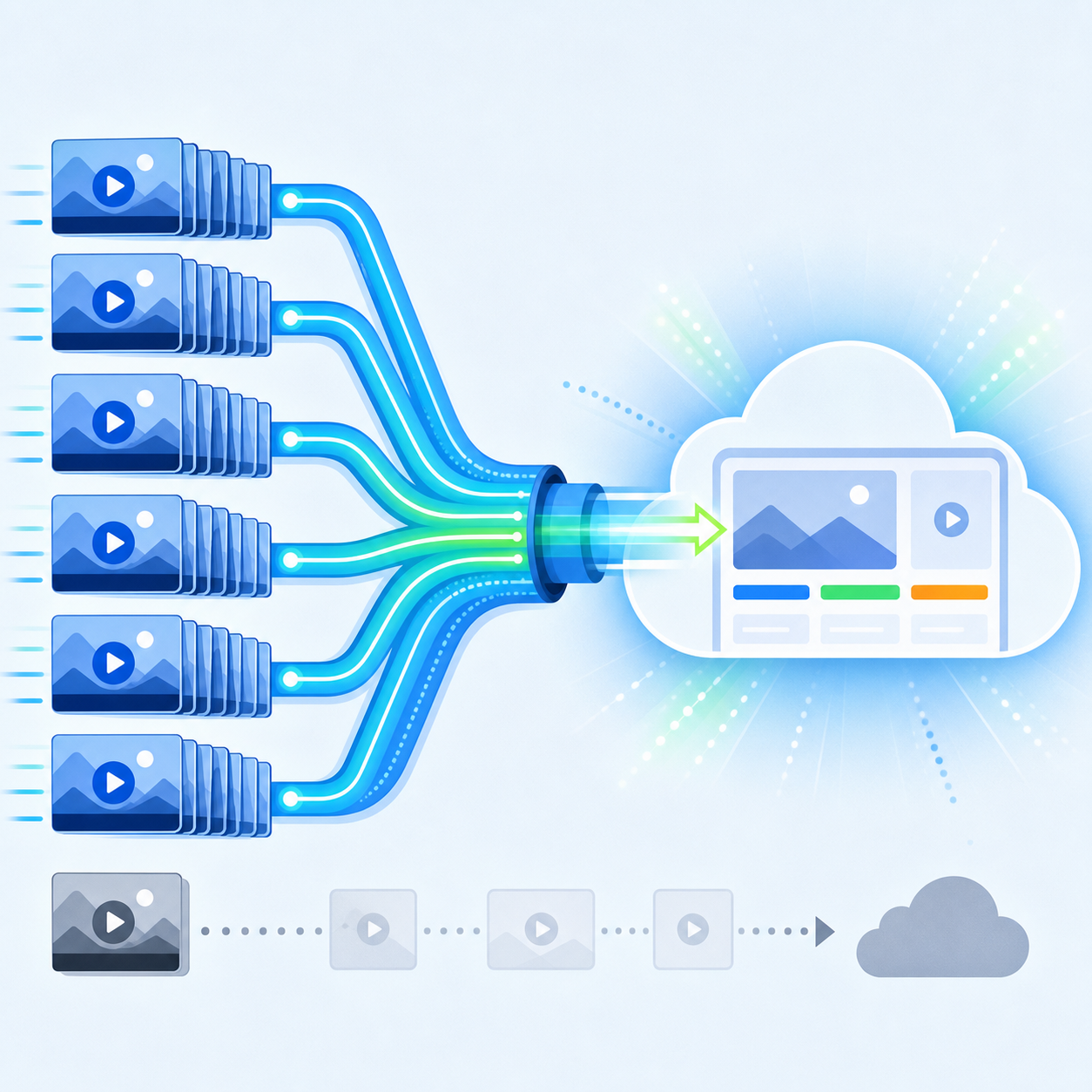
Speed is the point. A winning asset has a short shelf life, so the faster it goes live, the more momentum you capture before it goes stale.
Avoiding Creative Fatigue at Scale
Creative fatigue is the drop in performance when the same ad hits an audience too many times. The warning sign is mechanical: frequency climbs while click-through falls, and cost per result creeps up behind it.
The fix is a queue of fresh, proven variants waiting to swap in. Your testing engine keeps feeding new organic winners into the refresh pipeline, so a fatiguing ad has a replacement ready.
This is why organic-to-paid runs as a loop. Graduate winners, watch them fatigue, graduate the next batch.
Using Organic Insights to Sharpen Paid Targeting and Retargeting
Organic engagement tells you who to target. Build lookalike audiences from viewers who watched or saved a proven post (AI selecting winning UGC for paid ads can accelerate this step), then layer interest targeting to widen the cold pool. Match creative to temperature: winners prospect to cold audiences, and warm segments who engaged organically get retargeted with a closing offer, since retargeted visitors convert roughly 70 percent more often.
The rule: never serve the same creative to cold, warm, and hot at once.
Measuring the Full Loop: From Organic Signal to Attributed Sales
Measure both stages in one connected view instead of separate reports. Match the metrics to the stage:
- Organic: reach, engagement rate, watch time, saves
- Paid: ad delivery, spend, impressions, clicks, platform-attributed purchase value
Tie each ad back to its source post, so you know which creator and hook drove the sale. Read this as tracked and attributed by the ad platform, not perfect attribution.
Log every result in a content performance database. Winning patterns then feed the next brief.
Staying Compliant: FTC Disclosure on Organic and Paid Creator Content
Disclosure rules do not change when a post becomes an ad. The same requirement applies to organic UGC, whitelisted ads, and boosted content: review the FTC influencer disclosure rules, which call for a clear, conspicuous label like #ad or #sponsored that a viewer catches without hunting for it.
The reliable approach is a workflow gate, where disclosure gets checked before a post publishes or a code goes live, structurally enforced as a hard gate instead of left to memory. That reduces risk; it does not erase it.
Write the disclosure requirement into the brief, not after launch.
How Launchpoint Runs the Organic-to-Paid Loop End to End
Everything runs as one connected system. We recruit creators, produce organic UGC at scale, track performance, graduate winners into Meta and TikTok social ads, and pay creators on content, views, ad spend, or attributed GMV.
Boost Codes graduate top organic Canvas performers into paid at a flat fee per video, so rights are locked in the brief and never renegotiated mid-campaign. TikTok Spark Boost Codes drive 25 percent higher CTR. Bulk Meta launch removes one-by-one uploads. Fraud checks catch duplicate content and duplicate pay.
Billing is a documented 20 percent usage fee, no percentage-of-spend markup (see the full pricing guide).
You approve or reject. We run the campaign.
Final Thoughts on Building an Organic-to-Paid Ads Workflow
Think of it as one loop, not two channels: organic surfaces the winners, paid scales them, and the cycle repeats on every new batch. When you match creative to audience temperature and keep the pipeline full, your budget starts working harder. You get faster launches and less wasted spend. Set up a call if you want us to run the whole thing for you.
FAQ
What's the best way to decide which organic UGC posts are worth turning into paid ads?
Judge posts on resonance signals, not follower count: engagement rate against views, watch time and completion, saves and shares, comment sentiment (questions about where to buy beat empty praise), and early velocity in the first 24 to 48 hours. The decision rule is simple: if a post clears your engagement and save thresholds inside two days, graduate it to paid.
I'm tired of chasing creators for TikTok Spark codes over DMs, is there an easier way to manage this?
Yes. The fix is timing plus centralization: capture Spark codes and Meta permission grants at the contracting stage instead of once a winner is ready, and collect every permission in one place tied to each post. Launchpoint keeps the permission step connected to the content and ad workflow, so lapsed codes don't stall a launch mid-flight.
My team spends hours manually uploading the same creator videos into Meta one by one, is there a faster way?
Yes. Batching removes that tax: load creative in bulk, keep each file mapped to its campaign and ad set, and launch many variants in one pass. Launchpoint supports bulk creative upload and bulk Meta ad launch, which matters because a winning asset has a short shelf life and speed captures momentum before it goes stale.
What is whitelisting and when should you lock down usage rights?
Whitelisting (also called allowlisting) is permission to run paid ads from a creator's handle, so the ad carries their credibility instead of your brand account. Lock the terms into the brief before the shoot, when you hold pricing power, since waiting until content is live hands all pricing power to the creator.
Do FTC disclosure rules change once an organic post becomes a paid ad?
No. The same clear, conspicuous label (like #ad or #sponsored) applies to organic UGC, whitelisted ads, and boosted content alike. The reliable approach is a workflow gate where disclosure gets checked before a post publishes or a code goes live, structurally enforced as a hard gate instead of left to memory.