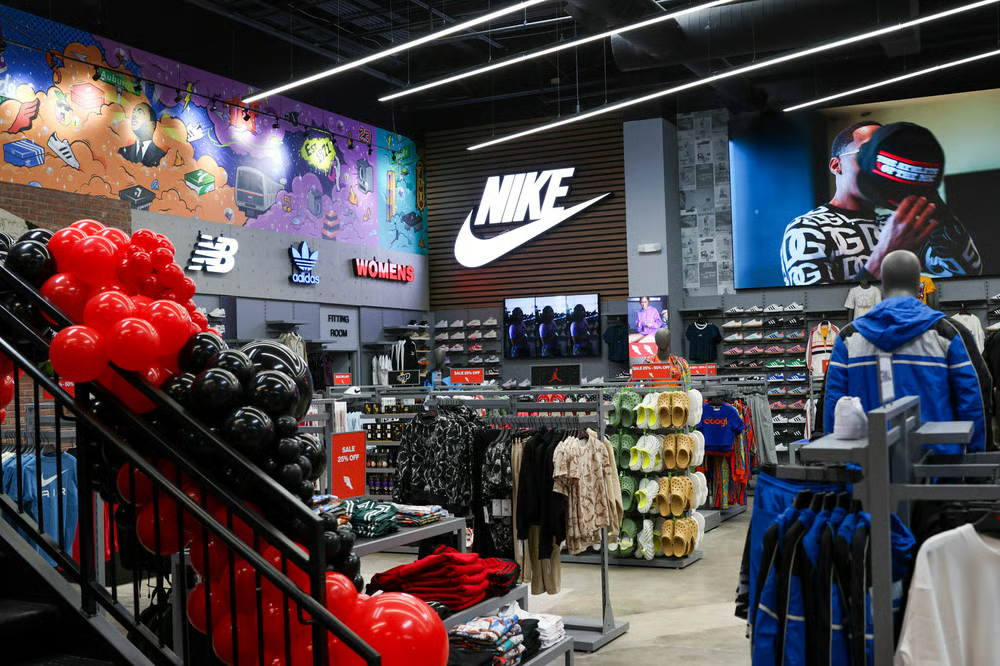
You launch a CPG product in retail, which means conversion happens on a shelf in a physical store. You need athletes posting from inside those stores to drive foot traffic, but only if they're posting from stores near their actual followers and only if you can verify they showed up. Running that across hundreds of locations without turning into a full-time babysitting job comes down to whether you have the infrastructure to handle store assignment, visit verification, and content approval all in one workflow.
TLDR:
- College athletes sell proximity, not reach: they cluster geographically near retail stores.
- In our network data, small creators under 5,000 followers drive 20% higher conversion than larger creators.
- Store visits add ~$30 to base creator rates, plus performance bonuses tied to views.
- Athlete posts lift next-day foot traffic 3-4%, but the effect fades within a week.
- Launchpoint's Drive-to-Retail verifies store visits, handles briefing and payouts end-to-end.
Why Athletes Drive In-Store CPG Sales Better Than Traditional Influencers
A traditional influencer sells reach. A college athlete sells proximity. For a CPG brand whose conversion event happens on a shelf and not a screen, that distinction decides the campaign. Since the NCAA opened the door for athletes to profit from NIL, a verified network of student-athletes became available to brands directly.
Two things make this group convert in-store better than a general creator pool. First, athletes carry campus credibility and signal trust to algorithms in a way random UGC creators do not. Second, they cluster geographically, so creator coverage maps to retail zones instead of scattering across markets where you have no shelf presence.
The engagement gap holds up under direct comparison. In our network data, creators under 5,000 followers drive 20% higher conversion than larger creators, and a 3,097-follower creator hit a 17% like rate against Zac Efron's 0.49%, a 35x difference. For a buyer who needs trial at a specific chain, peer credibility in the right zip code beats raw audience size.
Building Your Retail Store List and Geographic Strategy
Start with the data you already have. Your retailer sells your SKUs at specific locations that cluster in certain DMAs, chains, and regions. Pull the store list first, then build the creator map on top of it. Sourcing creators before you know where product sits puts content in front of shoppers who can't buy.
Three inputs decide which stores to target:
- Distribution depth: chains and regions where the SKU is stocked across enough doors to support a real push
- Retail support obligations: locations tied to a buyer relationship or trade commitment where proof of shelf carries weight
- Creator density: cities and campuses with verified athletes whose followers live near those stores
Match creator audience location against store zip codes, not home location. We filter sourcing by audience geography, then assign creators to named store locations across the footprint instead of clustering everyone at one outlet.
Creating In-Store Content Briefs That Athletes Will Actually Execute
A brief that reads like a shot list scares athletes off. A brief that says "post about the product" gets you a blurry shelf photo with no brand name visible. The fix sits between those two failures.
Spell out the proof requirements and nothing else:
- Which store to visit, named by specific location, not a chain logo
- What the shot must show: product on shelf, then product in hand or cart
- One required talking point: the SKU name and where to find it in-store
- Format and surface, like a story with a location tag
- Deadline and the disclosure tag
Keep the creative loose past those points. Tell an athlete to find your product and react in their own voice, and the content reads native. Over-script the caption and acceptance rates drop, because a complicated ask competes with every simpler deal in their queue. We write briefs at this level and run them through review before posting, so direction stays consistent without turning each visit into a production shoot.
Verifying Store Visits and Geo-Tagged Proof of Purchase
A location tag does double duty. It proves a creator stood inside the store, and it files the post under that location's page, where every tagged post collects into a running gallery of real shoppers with your product in hand. That gallery becomes free promotion on the location page.
The proof only holds if the tag is real. Self-reported check-ins invite staging, so trust the workflow over the screenshot.
- Native location verification confirms the visit through the workflow, not a creator's word
- Automated round-robin distribution assigns creators across named store locations, so coverage spreads instead of clustering at one convenient outlet
- Geo-tagged posts tie each piece of content back to the store it claims to come from
We verify physical store visits inside the system and assign store locations automatically, which is what separates verifiable proof of presence from inferred proximity.
FTC Disclosure Requirements for In-Store Retail Posts
The rule itself is short. A sponsored post needs a disclosure that is clear and conspicuous, meaning an ordinary shopper scrolling fast cannot miss it. A buried hashtag fails. So does a vague "thanks to my partners."
Every paid post carries the disclosure, no matter where it was shot. A dairy-aisle story needs it. A snack-shelf TikTok needs it. Format changes how the disclosure shows up, not whether.
| Surface | Where the disclosure goes |
|---|---|
| Instagram Stories | A visible text overlay reading "#ad" or "Paid partnership," not hidden behind a sticker |
| TikTok videos | On-screen text plus a spoken or caption mention, since audio-only can get missed |
| Feed posts | At the front of the caption, above the "more" cutoff |
We treat disclosure as a hard gate inside the approval workflow, so a post without the right tag does not move to live. That keeps compliance off the athlete's judgment and out of your inbox.
Measuring Foot Traffic Lift From Athlete Retail Content
Attribution comes down to a comparison. Run athletes in test markets, hold matched markets dark, then measure the sales difference across the same window. Tie creator post timestamps to zip-level scan data from your retailer feed and isolate the lift. The design only holds if the control markets behave like the test markets before any post goes live, so match them on baseline velocity, store count, and seasonality, not just region.
Three inputs feed the measurement:
- Post timestamps: the exact date and store a creator tagged, so you know when exposure started in each zip
- Zip-level scan data: unit sales pulled from your retailer feed at the store or zip granularity, not the chain total
- Matched control markets: dark zips with the same SKU and distribution, used as the baseline you subtract from
Read the lift as the gap between exposed and control over the post window, then back out anything that moved both at once. A retailer promo, an endcap reset, or a price cut that hit every market inflates the number if you skip that step. Strip those out and what remains is the share of foot traffic the posts actually moved.
The effect is real but short-lived. When brand mentions rise by one standard deviation, next-day foot traffic lifts 3-4%, an effect that fully fades within a week. That short half-life shapes how you read the data and how you schedule: a single post measured a week out shows almost nothing, so pull scan data on a one-to-three-day lag against each post and cluster posts so the daily bumps stack instead of scattering. Time the cluster against the window you actually want shoppers in-store, like a launch weekend or a feature reset, not weeks ahead of it.
Pricing Athletes for Store Visit Campaigns
A store visit costs the athlete more than a couch post. They drive to the store, find your product, and shoot inside the aisle. That travel and logistics requirement adds roughly $30 on top of base creator rates, and it sits independent of follower count. Shoot effort drives the number, not audience size.
Structure pay as a guaranteed baseline plus view-based performance bonuses, not a flat per-post fee. The baseline covers the trip and the proof. The bonus rewards the posts that actually travel.
- Base rate: tied to category and content effort, with the in-store add-on layered on top
- Performance bonus: laddered to view thresholds, paid only when reach materializes
We price each creator upfront so you see the full cost before a single athlete walks into a store. For a complete breakdown of Launchpoint's pricing model, see the pricing guide.
Scaling From 10 Stores to 500 Campuses Simultaneously
Ten stores you can run by hand. Five hundred breaks the model. The math is simple: one person managing creators one-to-one caps out around 10 to 20 relationships before the message threads, payment reminders, and brief questions swallow the week. Multiply that across campuses and the coordination cost grows faster than the campaign.
What holds at scale is infrastructure, not headcount. A ready creator network covers hundreds of footprints at once. Automated store assignment maps athletes to store locations without a spreadsheet. Batch briefing pushes the same proof requirements to thousands of creators, and one approval queue keeps review centralized.
That is how C4 ran 4,000+ athletes across 535 campuses inside a single workflow.
How Launchpoint Runs Athlete Retail Campaigns End-to-End
Every step above sits inside one product: Drive-to-Retail, built for CPG brands with retail distribution. We match athletes to your store geographies, verify the physical visits through the workflow, handle briefing and approval, run payouts, and return geographic reporting that maps views and engagement against your retail footprint.
The C4 Energy program shows what that produces at scale: 80M+ views at a $1.62 CPM, all organic. Native location verification and automated round-robin distribution kept coverage spread across stores instead of pooling at a few outlets.
You approve or reject content. We run sourcing, contracting, shipping, briefing, posting, and payouts end-to-end, so the coordination never lands in your inbox.
Final Thoughts on Using Athletes for Retail Store Activations
Creator campaigns break down when you try to scale store visits through DMs and spreadsheets. The proof requirements multiply, the coordination drowns your inbox, and you lose coverage across markets where you actually stock product. We built Drive-to-Retail to handle that exact workflow at scale. Book a quick call and we'll show you the geo-verification system and how C4 ran 4,000+ athletes across 535 campuses without manual coordination.
FAQ
Can I build a Drive-to-Retail campaign without a full-time person managing creator coordination?
Yes, because the managed-service operator handles sourcing, briefing, approvals, payouts, and tracking while you approve or reject content. Running 500 campuses simultaneously through one workflow eliminates the 1:1 coordination that normally requires dedicated headcount or VA support when managing creators manually.
What's the best way to verify athletes actually visited my retail stores versus just posting from home?
Use native location verification through the workflow that confirms physical store visits automatically instead of relying on self-reported screenshots or creator promises. Automated round-robin distribution assigns creators to named store locations across your footprint, so coverage spreads instead of clustering at one convenient outlet and geo-tagged posts tie each piece of content back to the specific store location it claims to come from.
How long does organic reach from in-store posts actually last before the effect fades?
Brand mentions that drive a one-standard-deviation increase in social activity produce a 3-4% lift in next-day store foot traffic, but the effect fully fades within a week. Time your athlete posts to align with the exact window you need shoppers walking through doors, not weeks before a launch.
Should I pay athletes a flat fee per post or use performance-based compensation for store visits?
Structure pay as a guaranteed baseline covering the store visit logistics (roughly $30 added to base creator rates for travel and proof) plus view-based performance bonuses laddered to thresholds. The baseline covers the athlete driving to the location and shooting the proof, while bonuses reward posts that actually reach audiences instead of paying the same amount regardless of performance.
Why do athletes convert in-store better than traditional influencers for CPG retail campaigns?
Athletes cluster geographically around campuses that map to retail distribution zones and carry peer credibility that, in our network data, drives 20% higher conversion than larger creators. Creators under 5,000 followers hit a 17% like rate versus 0.49% for celebrity accounts in direct comparison, a 35x engagement gap where campus proximity and authentic endorsement beat raw follower counts for products sold on shelves.