You're eligible for NIL deals right now, whether you're D1, D2, D3, or even high school in most states, but you're probably not on the platforms where brands actually post opportunities. NIL marketplaces handle the compliance paperwork, tax forms, and payment processing that make brands willing to work with hundreds of athletes instead of just the ones with 50,000 followers. The difference between athletes earning from NIL and those who aren't isn't their stats or social media presence. It's knowing where to show up when brands are ready to pay. Our NIL deals guide walks through deal types end-to-end; NIL marketing strategy shows why brands buy athlete content in the first place; and structuring NIL agreements is what keeps both sides out of gray areas once money moves.
Download the Launchpoint app to access brand deals from your phone and start earning from NIL in under five minutes.
TLDR:
- NIL deals work at every division level if you match your approach to your visibility tier
- Brands pay for engaged audiences over follower counts: 800 active followers beat 10,000 passive ones
- Submit every deal over $600 to your school's compliance office or risk losing eligibility
- Local businesses convert better than national brands for athletes with under 5,000 followers
- Launchpoint connects 20,000+ verified athletes with brands like C4 and Dr Pepper while handling all contracts, payments, and tax forms
Understanding NIL Deals and What Counts as Valid Opportunities
NIL deals let you profit from your name, image, and likeness as a student athlete. You can get paid for posting about products on social media, making personal appearances at local businesses, or creating content that brands use in their marketing.
Here's the reality: 41% of all NIL deals go to football players, and most athletes earn under $100 annually from NIL. While top athletes command six-figure NIL valuations, this doesn't mean opportunity doesn't exist for everyone else. You just need strategy over wishful thinking.
Valid opportunities include social media posts featuring brands, personal appearances at events or camps, autograph sessions, and content creation for company marketing. The difference from traditional sponsorships: you're compensated for influence and audience reach, not athletic performance. Even 500 followers count.
Building Your Personal Brand Before Pursuing Deals
Brands don't pay for athletic talent. They pay for audience attention and trust.
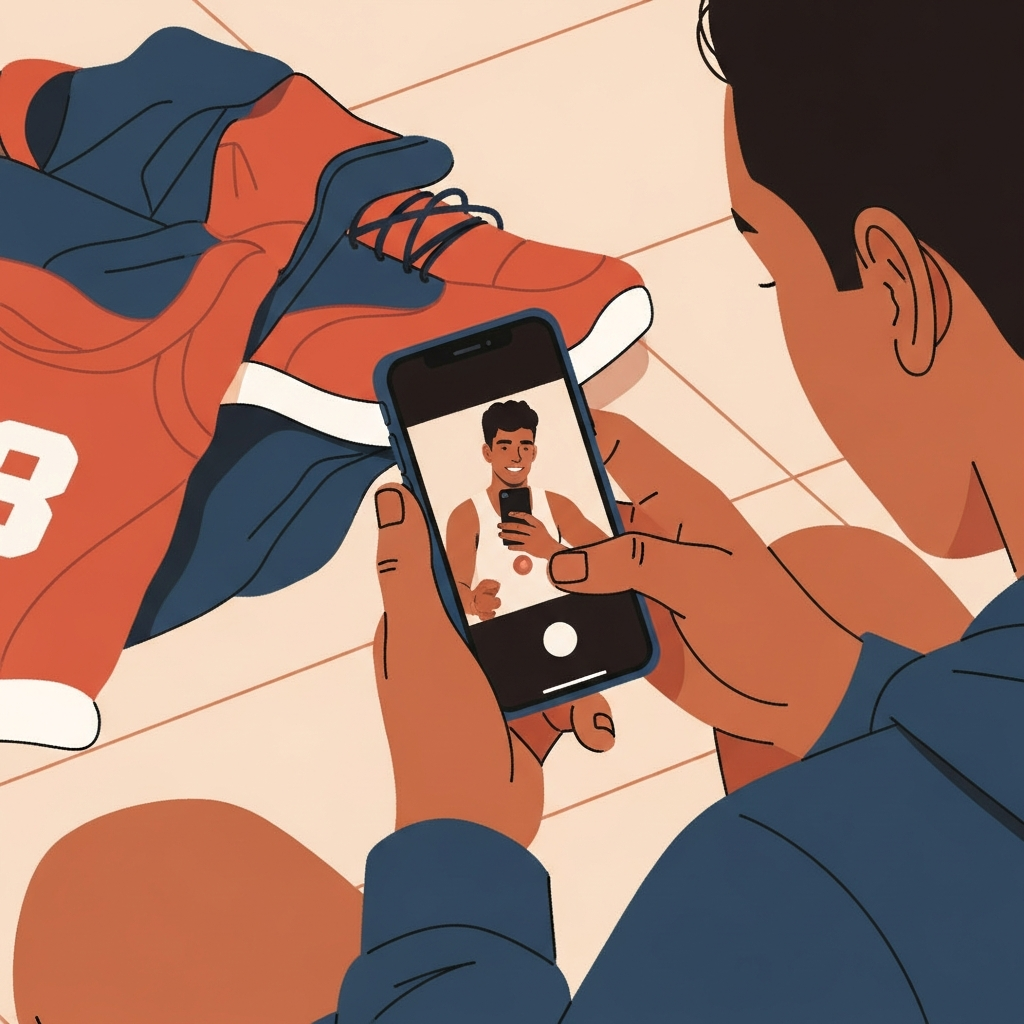
Your first job isn't finding deals. It's building something worth sponsoring. Start by posting 3-4 times weekly on TikTok or Instagram. Show training sessions, game preparation, and life as an athlete using lo-fi videos. The content doesn't need polish, just attention in the first three seconds. It needs consistency and personality. Borrow the same obsession with early retention from short-form playbook as lifestyle creators—NIL is still content-first.
Here's what separates athletes who get deals from those who don't: a clear identity beyond stats. Maybe you're the first in your family to attend college. Maybe you volunteer weekly at youth camps. Maybe you're majoring in biochemistry while playing Division III soccer. That story matters more than your follower count.
Brands need creators who feel real. Give them something to work with.
Getting NIL Deals as a College Athlete by Division Level
Every NCAA division can secure NIL deals. The approach changes based on your visibility and competition level.
D1 athletes have built-in recognition and larger audiences, which attracts national brands. If you're at a major program, companies like C4 Energy and New Era actively recruit partnerships at your level. Your strength: reach. Your constraint: dozens of teammates with identical advantages.
D2 athletes occupy the middle ground. You won't draw the same national attention as D1, but you have more credibility than D3. Target regional brands and businesses with locations near your campus. Athletic departments at this level often broker connections with community sponsors.
D3 athletes need a localized strategy. You can't depend on athletic prestige alone. Instead, focus on neighborhood businesses, campus-area restaurants, and community organizations. Your advantage: accessibility and relatability. Small businesses prefer working with athletes they can meet in person over high-profile names outside their budget.
The path exists at every level. Match your division's natural strengths to the right brand tier.
How to Get NIL Deals in High School
High school NIL access is expanding fast. By late 2025, 45 states plus Washington, D.C. will allow high school athletes to earn from their name, image, and likeness in some capacity.
Rules vary wildly by state. California permits deals with minimal restrictions. Texas allows NIL but prohibits athletes from using their school's name, logo, or facilities in promotional content. Some states require parental consent for minors. Others mandate financial literacy training before athletes can accept compensation.
Most states share three core restrictions: you can't use your school's intellectual property without permission, pay-for-play arrangements where compensation ties directly to athletic performance or recruitment remain banned, and deals with alcohol brands, gambling companies, or adult content are off-limits.
Check your state's high school athletic association website for current regulations. Rules change frequently as states test policy adjustments.
Finding and Joining NIL Marketplaces
NIL marketplaces connect athletes with brands looking for partnerships. These services handle contracting, payments, and compliance while you focus on creating content and building relationships.
Most marketplaces follow the same signup process. Create a profile with your sport, school, social media handles, and audience demographics. Brands browse athlete profiles or post available deals. You apply to opportunities that match your interests and follower count.
| Marketplace | Athlete Eligibility | Key Features | Brand Partners | Services Provided |
|---|---|---|---|---|
| Launchpoint | 20,000+ verified college athletes across all divisions plus high school athletes in eligible states | Direct brand campaigns, product fulfillment, automated compliance tracking, content approval workflows | C4 Energy, Dr Pepper, New Era, and other national brands | Handles contracts, payouts, tax forms, product shipping, and compliance documentation for both athletes and brands |
| Opendorse | College athletes at all division levels with focus on athletes at larger programs | Social media amplification tools, brand matching algorithms, deal marketplace | Mix of national and regional brands across multiple industries | Brand discovery tools, contract management, payment processing, and social media performance tracking |
| INFLCR | College athletes with emphasis on team-based implementations through athletic departments | Content management system, brand connection tools, team collaboration features | Local and regional businesses, community partners | Content library management, local business matching, deal facilitation, and athlete content distribution |
Major NIL Marketplaces
Launchpoint works with over 20,000 verified college athletes across all divisions and high school athletes in eligible states. We handle product fulfillment, payouts, and tax forms while brands approve content before it goes live. Athletes get access to deals from companies like C4 Energy, Dr Pepper, and New Era through our brand partner program.
Get the Launchpoint app and browse available deals from national brands that are ready to pay you right now.
Other options include Opendorse, which focuses on social media amplification and brand matching, and INFLCR, which helps athletes manage their content and connect with local businesses.
Join multiple marketplaces. Opportunities vary by who brands choose to work with, and signing up costs nothing.
How to Pitch Yourself Directly to Brands
Marketplaces work for discovery. Direct pitching works better when you know which brands to target.
Start with products you genuinely use. Brands can spot forced partnerships immediately, and audiences disengage when recommendations feel fake, which is why many influencer campaigns fail. If you drink a specific protein shake, train in particular shoes, or eat at a local restaurant weekly, those are your strongest pitch opportunities.
Before reaching out, check their current athlete partnerships. Look through Instagram tagged photos and TikTok brand mentions. If they're working with athletes at your follower count and competition level, you fit their existing strategy. If every partner has 50,000+ followers and you have 1,200, save that pitch for later.
Your outreach needs three components: your background, your brand alignment, and your specific offer. Keep it under 100 words. Here's a template: "I'm a D2 soccer player at [School] with 2,400 TikTok followers focused on fitness content. I use [Product] before every training session, and my audience engages heavily with workout posts. I'd create 2 Reels monthly featuring [Product] for [compensation or product exchange]."
Instagram DMs work for smaller brands. LinkedIn works for corporate marketing contacts. Email works when you find a marketing director through the company website.
Send your pitch. Wait five days. Follow up once. Then move to your next target. Most outreach gets ignored, and that's standard across creator marketing.
Starting Local with Small Businesses and Community Partners
Local businesses care about reach in their zip code, not your follower count. They want athletes who can show up at store openings, post about their services, and bring customers through the door.
These partnerships pay modestly but consistently. A coffee shop near campus might offer $50 monthly plus free drinks for weekly Instagram stories. A local gym could trade membership for TikToks showing your training routine. Small checks stack faster than waiting for one big brand deal that never comes.
Start with businesses you already visit. Talk to owners directly. Mention you're an athlete looking to help promote local spots. Most will say no. Some will ask what you have in mind. That conversation becomes your first deal.
Maximizing Your Value Without a Large Following
Follower count matters less than you think. Creators with under 5,000 followers drive 20% higher conversion rates because smaller audiences trust recommendations more. Your 800 engaged followers beat 10,000 passive ones every time.
Focus on engagement rate instead of reach. Divide total engagement by follower count. Anything above 3% puts you ahead of most athletes with larger audiences due to the engagement paradox.
When reaching out to brands, lead with proof of attention: average story views, comment-to-follower ratio, saves per post, or audience demographics. A D3 athlete with 1,200 followers in one city delivers more value to a regional business than a D1 athlete with 15,000 scattered nationally.
Niche content wins. General sports updates compete against everyone. Content about being a female lacrosse goalie, a walk-on who earned a starting spot, or balancing pre-med with Division II volleyball sets you apart immediately.
Understanding NIL Compliance, Taxes, and Reporting Requirements
Every NIL deal over $600 requires submission to your school's athletic compliance office. Miss this step and you risk eligibility issues that end your season.
Most schools require pre-approval before signing any agreement. Check your athletic department's NIL policy. Some conferences ban deals with competing brands. Others prohibit use of school logos without permission. Rules differ between institutions.
Tax obligations hit fast. Any company paying you $600 or more annually will send a 1099 form by January 31. You're responsible for quarterly estimated tax payments if you earn above certain thresholds. Set aside 25-30% of NIL income for federal and state taxes.
State laws add another layer. Some require NIL income disclosure to your school. Others mandate financial literacy training before you can accept deals.
Scaling Your NIL Success with Creator Marketing Services
Most brands want to work with college athletes but can't handle the backend work. Managing 50 individual contracts, tracking payments, shipping products, and filing 1099s costs more in staff time than the campaign delivers in value.
Creator marketing services solve this by handling everything brands hate dealing with. Contracts, payouts, product fulfillment, tax forms, and compliance checks get managed by a third party so brands can run campaigns with hundreds of athletes as easily as working with one.
When a brand can activate 500 athletes instead of 5, they stop filtering exclusively by follower count. D3 athletes get the same access as D1. Athletes with 800 followers compete for deals previously reserved for verified accounts. The barrier drops from "Can we afford the administrative burden?" to "Does this athlete's content work for our brand?"
Services that remove administrative barriers create more opportunities than any amount of self-promotion ever will.
Final Thoughts on Securing NIL Partnerships
Getting NIL deals as a college athlete comes down to showing up consistently and targeting the right opportunities for your situation. Stop waiting for perfect follower counts or Division I status before reaching out to brands. Small businesses need athletes who can drive local traffic, marketplaces connect you with national campaigns, and direct pitching works when you lead with engagement rates instead of just follower numbers. Your first partnership opens doors to better ones.
Download Launchpoint on iOS to join 20,000+ verified athletes earning from brands like C4, Dr Pepper, and New Era.
FAQ
How much do most college athletes actually make from NIL deals?
Most athletes earn under $100 annually from NIL, with 41% of all deals going to football players. However, earnings scale with engagement rate and content strategy instead of just follower count or sport. Athletes with 500-1,200 engaged followers often secure consistent local partnerships worth $50-200 monthly.
Can high school athletes get NIL deals in 2026?
Yes, 45 states plus Washington D.C. allow high school NIL deals by late 2025, though rules vary by state. California permits deals with minimal restrictions, while states like Texas allow NIL but ban using school logos or facilities in promotional content without permission.
What follower count do you need to start getting NIL deals?
You can secure deals with as few as 500 followers. Creators with under 5,000 followers drive 20% higher conversion rates than larger accounts because smaller audiences trust recommendations more, making engagement rate more important than total reach.
Do D3 athletes have access to the same NIL opportunities as D1 athletes?
D3 athletes can access the same NIL marketplaces and brand campaigns as D1 athletes, particularly through creator marketing services that remove administrative barriers for brands. Your advantage at D3 is focusing on local businesses and community partnerships where accessibility matters more than athletic prestige.
What happens if you don't report an NIL deal to your school?
Failing to submit NIL deals over $600 to your athletic compliance office risks eligibility violations that can end your season. Most schools require pre-approval before signing agreements, and missing these compliance steps creates problems that affect your ability to compete.